Event 1
Saphira and Ashton’s Mate Bond Discovery
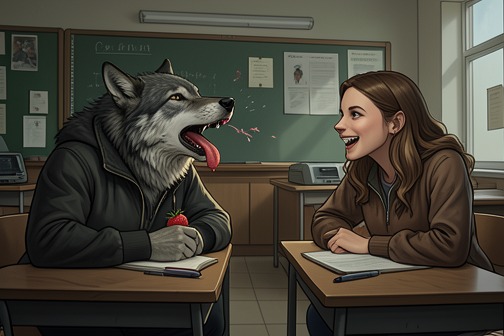
[Saphira and Ashton’s Mate Bond Discovery](entity:event-recall-event-saphira-and-ashton-s-ma-ef8b8cb938c8) occurs when the two werewolves recognize one another as mates in a school classroom. The discovery is immediate and bodily rather than chosen: the scent of strawberries makes [Ashton](entity:character-recall-character-ashton-b17e2cb78e23)’s wolf howl, while [Saphira](entity:character-recall-character-saphira-ed60c2eb7974)’s wolf, Tarrina, responds with equal joy when their eyes meet. That mutual recognition establishes the central emotional bond of the story, but it does not produce uncomplicated security. Ashton initially values a free life without a mate, and later his substance use and defensive anger place the newly recognized relationship under severe strain.
## Causes and First Recognition
Ashton enters the school carrying the identity of a rebellious alpha’s son who nevertheless maintains his grades. Before meeting Saphira, he regards mating as an unwanted limitation, believing that a mate would hold him back and that he should not surrender his freedom for a girl. His confidence is displayed through his awareness of other students’ attention and his casual wink at Lauren, but this social ease is interrupted by a scent he cannot dismiss.
The strawberry scent reaches Ashton as he enters the school and causes his wolf to howl with joy. He tries to shake off the reaction and continues toward his locker, but the response returns in history class when strawberries again fill his senses. His eyes turn toward the doorway just as a beautiful girl rushes into the room. The narrative makes the recognition a physical shock before it becomes a conscious conclusion: Ashton’s wolf identifies Saphira as his mate, and his immediate reaction is startled disbelief.
Saphira experiences the same event from the opposite side of the encounter. Her wolf, Tarrina, howls joyfully when her eyes lock with Ashton’s. She notices his shaggy brown hair, brown eyes, blue shirt, black leather jacket, and jeans, while also recognizing from his scent that he is a werewolf. When he looks at her, her eyes widen; when her wolf cries “Mate!”, she cannot fully comprehend what is happening and quickly looks away. Her new teacher’s welcoming smile does little to calm her because Ashton, her newly recognized mate, is in the very classroom where she is trying to find her footing.
## The Classroom Event and Its Mutuality
The discovery is presented through alternating perspectives, which prevents the bond from being reduced to one character’s projection. Ashton’s wolf reacts first in the school corridor and again at the classroom doorway; Saphira’s wolf, Tarrina, answers when their eyes meet. The repeated strawberry scent and the two separate declarations of matehood make the recognition reciprocal, involuntary, and biologically legible within the werewolf world.
Saphira’s arrival also gives the event a social and emotional contrast. Ashton is already settled in the school, confident enough to sit at the back of history class and flirt casually, whereas Saphira is new, nervous, and still checking her schedule with Mrs. Farner. The same glance that destabilizes Ashton’s assumptions about freedom intensifies Saphira’s difficulty adjusting to an unfamiliar environment. Their bond therefore begins not as a calm agreement but as a collision between his resistance to attachment and her immediate awareness that attachment has found her.
## Resistance and the Substance-Use Conflict
The discovery’s significance becomes clearer when Ashton’s later conduct tests what the recognition means in practice. In the cafeteria, Saphira finds a small plastic bag half full of white powder on the floor after it falls from Ashton’s pocket. When she asks what it is and why he has it, he snatches the bag away and tells her that what he does is none of her business. Saphira rejects that separation because he is her mate; the bond turns his private behavior into a matter affecting her as well.
Ashton later admits that he has been drinking. Saphira observes his wrinkled shirt, disordered hair, and slightly glazed eyes, and becomes angry at his apparent indifference to the possible consequences. Although alcohol and drugs affect werewolves less than humans, she recognizes that excessive use still harms them. Her concern is therefore not merely romantic possessiveness: it is an attempt to treat the bond as a responsibility requiring care, honesty, and intervention.
The conflict exposes the difference between instinctive recognition and relational commitment. Ashton’s earlier fear that a mate would restrict his freedom reappears as hostility when Saphira questions his drugs and alcohol. He can acknowledge the bond at the level of fate while resisting its practical demands. When Saphira leaves the pack house, she looks back toward the doorknob in the hope that he will change his mind and retract what he said. Instead, Ashton looks away. She bites her lip to stop herself from crying and runs out, turning the original moment of mutual recognition into a pattern of pursuit, withdrawal, and hurt.
## Consequences Across the Story
The mate discovery remains active long after the classroom scene because the bond continues to organize danger and care. Saphira is later struck by an arrow coated in poison, a fact a doctor reports in a grave voice while Ashton reacts with shock. The revelation makes the relationship’s stakes bodily and immediate: the mate whom Ashton once treated defensively can be placed in mortal danger, and the bond is now entangled with medical crisis rather than adolescent possibility.
The same care-centered tension appears when [Trevor](entity:character-recall-character-trevor-6629d67e0e5b) lies limp and sickly pale, with sweat-matted hair and twitching eyelids. Saphira has to beg [Carmen](entity:character-recall-character-carmen-20f84f7362f5) for more than five minutes to be allowed an hour alone with him, while Carmen has not slept and is barely eating. Although this scene concerns Trevor, it broadens the story’s recurring question of how love becomes care under pressure: protection can express devotion, but it can also become control over access, information, and decision-making.
The relationship eventually reaches a later stage in which Saphira and Ashton reunite while she is pregnant. When they stand only a foot apart, Saphira’s feet carry her toward him and she throws herself into his arms. Ashton holds her carefully around her stomach as she smiles contentedly and tells him that she missed him. That embrace does not erase the earlier rejection or substance-use conflict, but it shows the mate bond transformed from an involuntary discovery into a relationship capable of renewed tenderness and physical care.
## Narrative Significance
As a romance event, Saphira and Ashton’s Mate Bond Discovery combines discovery with immediate refusal. The wolves identify the relationship before the humans can understand it, creating an affective force that arrives through scent, howling, widened eyes, and an abrupt change of attention. The event’s value shift is sharp: Ashton moves from confidence in unencumbered freedom to the shock of being claimed by a bond he had denied wanting, while Saphira moves from nervous arrival at a new school to the overwhelming certainty that her mate is present.
The event also establishes the story’s central contradiction between destiny and agency. The bond is presented as mutual and undeniable, yet its existence does not guarantee maturity, safety, or trust. Ashton’s later defensiveness demonstrates that recognition cannot substitute for responsible action; Saphira’s anger and departure demonstrate that devotion can include confrontation rather than passive acceptance. The eventual careful embrace around her pregnant stomach gives the original classroom recognition its fullest consequence: what began as two wolves crying “Mate!” becomes a difficult, repeatedly tested commitment whose meaning is made through protection, separation, injury, and return.
Event 2
Ashton’s Rejection of Saphira

[Ashton’s Rejection of Saphira](entity:event-recall-event-ashton-s-rejection-of-s-6ab1f62faaec) is the formative rupture in the relationship between [Ashton Smith](entity:character-recall-character-ashton-smith-566fce6d6c10) and [Saphira Richards](entity:character-recall-character-saphira-richards-d478b1b8aa33). The scene begins with physical coercion and ends with [Ashton](entity:character-recall-character-ashton-b17e2cb78e23)’s explicit renunciation of the mate bond: he pulls [Saphira](entity:character-recall-character-saphira-ed60c2eb7974) into the school library, reveals that he knows both her werewolf identity and their status as mates, and rejects her by name. Saphira experiences the moment as the shattering of both emotional expectation and her wolf’s bond, making the rejection the event that defines their subsequent relationship as a struggle between imposed supernatural connection and human refusal.
## The Library Confrontation
Saphira is walking toward the cafeteria when a hand grabs her arm and yanks her into the library. Another hand covers her mouth before she can scream. She recognizes Ashton through the tingling of her senses before turning to find him watching her. The setting therefore turns an ordinary school passage into an ambush: the place associated with classes and lunch becomes an enclosed space in which Ashton controls the encounter and Saphira is denied the chance to initiate the conversation.
Ashton immediately states that he knows Saphira is a werewolf and that she is his mate. His disgusted manner makes the revelation an accusation rather than a declaration of mutual recognition. The mate bond, which Saphira understands as carrying an expectation of love, arrives in the scene through Ashton’s resistance to that expectation. His knowledge also removes any possibility that the rejection is caused by ignorance or misunderstanding; he knows what the bond means and refuses it deliberately.
## The Formal Mate Rejection
Ashton’s refusal becomes irrevocable when he identifies himself as Ashton Smith and rejects Saphira Richards as his mate. The formal wording gives the encounter the character of a performed decision rather than a passing insult. He says that he does not want a mate and never did, making his opposition appear directed not only at Saphira but at the role and obligations attached to the bond itself.
Saphira answers from the logic of the bond, insisting that because Ashton is her mate he is supposed to love her regardless of circumstances. Ashton rejects that premise as well. He tells her that he does not love her and never will, then insults her before turning away. His departure leaves Saphira alone and empty in the school library, so the scene’s final action is not negotiation but abandonment: Ashton claims the power to define the relationship, while Saphira is left to absorb its consequences without reciprocal explanation or comfort.
## Immediate Emotional and Bodily Consequences
The rejection produces an immediate value reversal. Saphira enters the encounter carrying the possibility of mate recognition; she leaves it in grief. Tears prick her eyes, her heart seems to shatter, and her wolf howls in pain. These bodily and supernatural responses present the rejection as more than a disagreement between two students. Ashton’s decision reaches through Saphira’s human emotions to damage the wolf-bound identity that makes the relationship structurally significant.
The scene also establishes the asymmetry of agency between the pair. Ashton initiates the physical confrontation, interrupts Saphira whenever she tries to speak, delivers the rejection, and walks away. Saphira can plead and protest, but she cannot make the bond produce the love she expects. The emotional violence is intensified by the fact that the bond remains meaningful to her even after Ashton denies its relational consequences.
## Rejection and Ashton’s Destructive Conduct
The rejection is later reframed by evidence of Ashton’s alcohol and drug use. In a cafeteria encounter, Saphira finds a small plastic bag partly filled with a white powdery substance after it falls from Ashton’s pocket. When she asks what it is and why he has it, he narrows his eyes, snatches the bag away, and tells her that his actions are none of her business. The object briefly makes his private conduct visible, but his reaction restores secrecy through anger and dismissal.
Ashton also admits that he has been drinking. Saphira notices his wrinkled shirt, disordered hair, and slightly glazed eyes, and she becomes angry at his apparent indifference to the risks. Although drugs and alcohol affect werewolves less than humans, the narrative makes clear that excessive use still affects them. Ashton’s refusal of Saphira’s concern therefore extends the original rejection: he denies not only the mate bond but also her claim to participate in decisions that threaten his health, judgment, and future position.
When Saphira leaves the pack house, she looks back at the doorknob hoping Ashton will change his mind and retract what he has said. Instead, he looks away. She bites her lip to suppress the sob rising in her throat, then runs from the pack house. His refusal to act becomes a second rejection, showing that the original declaration is sustained through passivity as well as speech. His status as the future alpha may excuse him from some consequences, but it does not repair the damage or make him accountable to Saphira.
## Continuing Stakes and Later Reversal
The rejection remains active in later crises rather than ending as an isolated school incident. When Saphira is struck by a poisoned arrow, a doctor informs Ashton that the arrow was coated in poison, and Ashton reacts with shock. The scene places him in a position of concern after he had earlier denied Saphira emotional and relational security, suggesting that care can return under the pressure of physical danger even when intimacy has been refused.
The same tension appears when [Trevor Richards](entity:character-recall-character-trevor-richards-0559ebda84e3) is incapacitated. Saphira begs [Carmen](entity:character-recall-character-carmen-20f84f7362f5) for more than five minutes to allow her one hour alone with [Trevor](entity:character-recall-character-trevor-6629d67e0e5b), while Carmen has not slept and is barely eating. This later caregiving scene broadens the story’s concern with protection and control: access to an injured loved one becomes something that must be requested, negotiated, and granted. The emotional structure recalls the library confrontation, where Ashton controlled access to truth and conversation, but it also shows Saphira acting persistently on behalf of someone vulnerable rather than accepting another person’s withdrawal as final.
[Pregnancy](entity:state-recall-state-pregnancy-cdafbf158725) further changes the meaning of the earlier rejection. Trevor tells Saphira that she cannot lead an army because she is pregnant, while Saphira answers that she is half faery and can cast a protective charm on herself. Her response asserts agency against protective reasoning that would restrict her action. By this point, the story has moved beyond the powerless figure abandoned in the library: Saphira now argues for her capacity to decide what risks she will take and what responsibilities she will assume.
The relationship eventually permits a direct physical sign of renewed attachment. When Ashton walks toward Saphira, she finds her feet moving toward him; when they are only a foot apart, she throws herself into his arms. He wraps his arms around her carefully around her stomach, and he tells her that he missed her. This later embrace does not erase the cruelty or finality of the school-library rejection, but it reverses its immediate direction. The person who once turned away now participates in an act of care, while Saphira’s movement toward him signals that the bond has not ceased to matter to her.
## Narrative Significance
Ashton’s Rejection of Saphira supplies the romance’s foundational no-way beat: the mates recognize one another, but one partner refuses the relationship before it can become mutual. Its dramatic force comes from the collision of two systems of meaning. For Saphira, the mate bond implies love and responsibility; for Ashton, the same bond represents an unwanted obligation that he attempts to cancel through formal language, insult, and withdrawal.
The event also establishes a recurring contrast between protection and control. Ashton’s later concern when Saphira is poisoned, Saphira’s efforts to care for Trevor, and the dispute over whether her pregnancy prevents her from leading all revisit the question of who has the authority to determine another person’s safety. The rejection is therefore not only a failed romantic beginning. It is the first clear demonstration that supernatural connection does not guarantee ethical behavior, mutual consent, or emotional care, and that any later reconciliation must confront the memory of the moment when Ashton chose to leave Saphira alone.
Event 3
MoonRaiders Pack Joining Ceremony
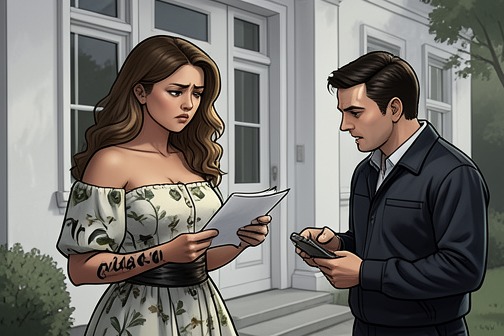
The [MoonRaiders Pack Joining Ceremony](entity:event-recall-event-moonraiders-pack-joinin-90a402d5d240) is the formal rite through which [Saphira Richards](entity:character-recall-character-saphira-richards-d478b1b8aa33) enters the [MoonRaiders pack](entity:character-recall-character-moonraiders-pack-e51c343d6dfa), turning an uncertain relocation into a binding social identity. Its decisive significance lies in the way it joins spoken loyalty to permanent bodily marking: [Saphira](entity:character-recall-character-saphira-ed60c2eb7974) does not merely receive shelter in a new community, but vows to protect the pack and its members with her life, then carries that affiliation on her skin.
## Setting and Preparation
The ceremony takes place at the [MoonRaiders Pack House](entity:location-recall-location-moonraiders-pack-hou-2020a6a940df), a huge white, old-fashioned building with three stories. The scale and appearance of the house distinguish Saphira Richards’s new pack from her previous, more unconventional pack and establish the rite as an entrance into an organized institution rather than an informal gathering. Standing outside the building, Saphira is visibly apprehensive about what awaits her, especially because she has only recently learned that membership requires a tattoo identifying each member with the pack.
[Trevor Richards](entity:character-recall-character-trevor-richards-0559ebda84e3) recognizes her nervousness and asks whether she is worried about “the whole tattoo thing.” His question places the emotional focus on the unfamiliarity of the ritual, while Saphira’s uncertainty also reflects her incomplete knowledge of MoonRaiders customs: she has not seen [Simon List](entity:character-recall-character-simon-list-03a5b193069b) or Trevor Richards wearing such marks and does not yet know what the tattoo will look like. Her father urges the children toward the entrance, and Saphira follows while hoping that the ceremony will go well. The movement from the exterior of the house into its interior functions as the rite’s first threshold, separating her former status from the membership she is about to assume.
## Vows and Public Acceptance
After an hour, [David](entity:character-recall-character-david-a0465b0b2f3d), the alpha, stands before Saphira. Her father and Trevor Richards have already completed their vows and gone into another room to be tattooed, leaving Saphira to undergo the central public declaration herself. David addresses her by her full name and asks whether she accepts the role of being a member of the MoonRaiders pack. Saphira answers that she does.
The second question makes membership explicitly reciprocal and dangerous rather than merely honorary. David asks whether she vows to protect the pack and its members with her life if faced with a drastic choice. Saphira again consents, avoiding eye contact with everyone except David. The exchange gives the ceremony its ethical core: the pack offers belonging, but belonging carries an obligation of life-and-death loyalty. David then directs her to the adjoining room for the final step, confirming that verbal acceptance alone does not complete the process.
## Tattoo and Embodied Identity
The marking room contains a black leather chair, a small table, and a needle beside tubes of ink. Trevor Richards is already seated there, smiling, while Saphira’s father reads a car magazine. [Trevor](entity:character-recall-character-trevor-6629d67e0e5b) reassures her that the tattoo hurts badly but is also “pretty cool,” then removes his shirt to show her the finished design. His tattoo is a black moon with an aquamarine-colored chain wrapped around it, positioned beneath his right shoulder blade.
The design follows a shared symbolic pattern while preserving an individual detail. The black moon identifies the pack’s emblematic imagery, while the chain is colored according to the member’s birthstone. When the tattoo artist explains that the birthstone color is used for the chain, Saphira understands why Trevor’s chain is aquamarine. The rule makes the mark simultaneously collective and personal: every member receives a recognizable sign of MoonRaiders affiliation, but the color ties that sign to the individual body.
Saphira’s own marking begins when the tattoo artist asks her to sit and remove her shirt. She looks toward her father and Trevor Richards as her cheeks turn rosy, then closes her eyes when the cold needle touches her back and causes pain. The ceremony therefore ends not with an abstract declaration but with an irreversible physical experience. The needle converts a promise witnessed by the alpha into a mark that remains after the spoken ritual has ended.
## Consequences and Narrative Significance
The ceremony establishes the MoonRaiders pack as a community with formal procedures, an alpha-led hierarchy, membership vows, and a standardized bodily emblem. Saphira’s entry is especially important because it gives her a recognized place within the pack at a moment when she is still emotionally unsettled by the move and unfamiliar with its traditions. Trevor Richards’s presence makes the transition familial and supportive, while David’s questioning supplies the institutional authority that validates her new status.
The event also anticipates the book’s later reliance on repeated rituals to define relationships and power. The full moon ritual is later presented as a method for restoring a rejected mate bond; the færy ritual is invoked as a leadership obligation for Saphira Richards and Trevor Richards; and the [Alpha–Luna succession](entity:concept-recall-concept-alpha-luna-succession-c59f7b9bee12) later publicly names [Ashton Smith](entity:character-recall-character-ashton-smith-566fce6d6c10) as alpha and Saphira Richards as Luna. Against those later ceremonies, the MoonRaiders Pack Joining Ceremony appears as an earlier model of identity-making through words, witnesses, space, and the body. It begins Saphira’s movement from outsider to participant, while the life-protection vow foreshadows how membership will continue to demand action rather than simple acceptance.
Event 4
Ashton and Saphira’s Full-Moon Bond Restoration

[Ashton and Saphira’s Full-Moon Bond Restoration](entity:event-recall-event-ashton-and-saphira-s-fu-a174847a4960) is the decisive ritual through which [Ashton](entity:character-recall-character-ashton-b17e2cb78e23) accepts [Saphira](entity:character-recall-character-saphira-ed60c2eb7974) after rejecting her and reconstitutes their broken mate bond. The event gives their reconciliation a supernatural and social form: love is not restored by apology alone, but by a rule-bound act performed at a precise lunar moment, followed by bodily marking, public announcement, and the couple’s eventual recognition as the pack’s alpha and Luna.
## Causes and Ritual Conditions
The restoration begins when Ashton tells Saphira that he wants to perform the full moon ritual. His proposal shocks her because the ritual is not merely a romantic gesture. It is the established mechanism by which a mate accepts the mate he previously rejected. Saphira immediately agrees because she wants their bond restored, turning Ashton’s request into the first clear movement from rejection toward reconciliation.
The ritual is governed by an exact temporal condition. It must occur at the closest full moon following the date of rejection, and the rejecting mate must mark the rejected mate when the full moon reaches its highest point. Ashton emphasizes the urgency by telling Saphira that the next day is the full moon. The deadline makes their reconciliation precarious: the bond can be restored, but only if the couple reaches the ritual’s threshold in time.
## The Ritual and Its Bodily Sign
The ritual’s defining act is Ashton’s mark on Saphira. By the following Tuesday, Saphira tells [Ella](entity:character-recall-character-ella-90e3fa62618f) that she and Ashton have mated and that he has marked her, confirming that the restoration has taken place. The mark lies just below her collarbone and depicts a rose wrapped in spiraling thorn vines, with Ashton’s name inside it. The image joins tenderness and pain: the rose signifies attachment, while the thorns preserve the memory that this bond has passed through rejection rather than beginning in uncomplicated harmony.
Saphira remains nervous about the ritual, but she describes Ashton as gentle and attentive, emphasizing that he made certain she was completely ready. Her account gives the event an important ethical dimension within the supernatural rules. The mark is powerful because it is required, but the scene also stresses preparation and consent. For Saphira, Ashton’s care becomes part of the meaning of restoration, and her affection expands beyond the ritual itself into a declaration that she loves everything about him.
The couple’s intimacy is framed by deliberate preparation rather than a single instantaneous transformation. After spending the evening learning about one another through a game of questions that extends far beyond its original premise, Ashton notes that midnight is approaching and asks Saphira whether she is ready. She answers without wavering. This exchange places emotional readiness alongside the ritual’s external lunar requirement: the bond can be restored only when the supernatural timing and the partners’ willingness converge.
## From Private Reconciliation to Pack Legitimacy
Once Ashton and Saphira are mated and she bears his mark, their relationship acquires public obligations. Ella tells Saphira that the couple must announce the bond to the pack at the next meeting. Ashton has already explained that the announcement is connected to the pack’s future leadership: he wants the pack to know that its next alpha has found his mate. The restoration therefore does more than repair two individuals. It establishes the partner whose presence is necessary to Ashton’s political identity.
That public dimension becomes explicit when [David](entity:character-recall-character-david-a0465b0b2f3d) addresses the assembled crowd and proclaims that there will be a new alpha and Luna. He names [Ashton Smith](entity:character-recall-character-ashton-smith-566fce6d6c10) as the future alpha and [Saphira Richards](entity:character-recall-character-saphira-richards-d478b1b8aa33) as his mate and Luna, prompting cheers and wolf whistles. The crowd’s response converts the restored bond into collective recognition. What began with Saphira’s shock at Ashton’s proposal ends as a social fact witnessed by the pack.
The later leadership announcement also clarifies why the ritual matters beyond romance. Ashton’s future authority is presented together with Saphira’s position beside him; the pack’s succession is not described as his achievement alone. The restored bond supplies the relational basis for the alpha-and-Luna order, linking private acceptance, bodily marking, and communal legitimacy.
## Conflict and Consequences
The restoration does not erase the instability surrounding Ashton and Saphira. Soon after their mating, Saphira discovers a small plastic bag partly filled with white powder after it falls from Ashton’s pocket in the school cafeteria. When she asks why he has it, Ashton angrily tells her that what he does is none of her business and snatches the bag back. The confrontation exposes a contradiction at the heart of the restored bond: Saphira regards Ashton’s conduct as her concern because he is her mate, while Ashton responds by asserting secrecy and distance.
The substance use develops into a broader crisis. Ashton admits that he has been drinking; his wrinkled shirt, disordered hair, and slightly glazed eyes make his intoxication visible. Saphira worries that alcohol and drugs can still affect werewolves when consumed excessively, and she challenges whether he cares about what might happen to him. His future-alpha status cannot excuse every danger or responsibility, so the relationship restored by the full moon immediately becomes a site where private devotion confronts leadership and self-destructive behavior.
Their conflict eventually drives Saphira from the pack house. As she reaches the door, she looks back in hope that Ashton will change his mind and retract what he has said, but he looks away. She suppresses a sob, leaves the house, and runs from the pack grounds. This departure shows the restoration’s limits. The ritual repairs the supernatural bond, yet it cannot by itself guarantee emotional safety, responsible conduct, or stable partnership.
## Narrative Significance
Ashton and Saphira’s Full-Moon Bond Restoration organizes the story’s recurring movement from separation to reintegration through ritual. Its structure combines a precise time, a required bodily sign, emotional preparation, and collective acknowledgment. The full moon creates sacred time distinct from ordinary school and domestic life; the mark makes the invisible bond visible; and the pack meeting gives the private transformation political consequences.
The event is also a turning point rather than a final resolution. Ashton’s request changes the value of the relationship from rejection toward renewed commitment, while the subsequent mark confirms that the change has been enacted rather than merely promised. Yet the drug discovery, Ashton’s intoxication, and Saphira’s eventual flight show that restored status and lived stability are not identical. The ritual can reopen the bond, but the couple must still negotiate trust, responsibility, and the demands of shared leadership.
Event 5
Simon and Amanda’s Mate Encounter
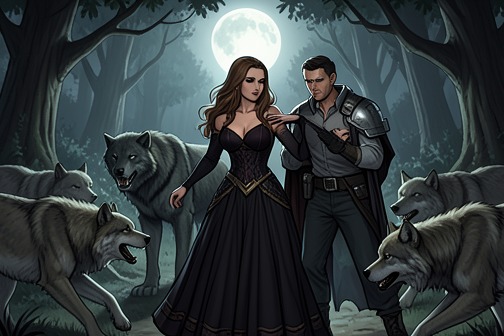
[Simon and Amanda’s Mate Encounter](entity:event-recall-event-simon-and-amanda-s-mate-3d2372c68e4b) is a decisive reversal in the novel’s pattern of species conflict: [Amanda](entity:character-recall-character-amanda-f7c90eb37305), a vampire being pursued by werewolves, discovers that the third-ranking werewolf among her pursuers is her destined beloved. The scene does not erase the danger between their peoples, but it places intimate recognition inside that danger, making a cross-species bond the immediate counterforce to the hostility that organizes the surrounding world.
## Causes and Background
Amanda enters the encounter under immediate threat. At night, the moonlight falls through the trees while werewolves chase her, and she identifies the reason for their hostility plainly: she is a vampire, and werewolves do not generally welcome her kind. The setting therefore establishes the encounter as a flight across a species boundary rather than a peaceful meeting. Amanda is not searching for romance; she is attempting to survive pursuit while protecting the person with her.
That person is [Austin](entity:character-recall-character-austin-046612feecee), whom Amanda shelters behind her as the wolves close in. Her response is protective rather than submissive: she moves out from behind a tree with Austin concealed behind her and takes a stance between him and the approaching wolves. Her willingness to risk her own life is tied to her fear of losing her only family member, whom she describes as her light and her world. The scene consequently gives the encounter a second stake beyond Amanda’s survival: the preservation of chosen family in a world where species identity makes both outsiders vulnerable.
## The Recognition in the Forest
Three werewolves confront Amanda: a beta, a third-in-command pack member, and a high-ranking member of the pack. Amanda meets each of their eyes, but her attention stops on the third. The narrative describes a sudden narrowing of perception in which everything around her seems to blur and the chosen werewolf becomes the only figure she can see. This bodily and visual interruption marks the value shift at the center of the scene: the wolf who represented danger becomes, through recognition, the person Amanda understands as her beloved.
The recognition is immediate and mutual in its narrative force, although the relationship is not yet socially settled. Amanda identifies the third werewolf as her beloved before she knows his name. He then shifts back into human form, and his clothing materializes on his body; the other two wolves follow after receiving a signal from him. The transformation changes the terms of the confrontation without making Amanda trust him automatically. Even after recognizing the bond, she remains cautious and asks who he is. He asks the same question in return, and the exchange preserves the tension between supernatural certainty and personal unfamiliarity.
[Simon](entity:character-recall-character-simon-99ba1396ec7a) answers that his name is Simon. He has blonde hair and ocean-blue eyes, details that individualize the figure who had first appeared as one member of a threatening group. Amanda’s thought of him as “my werewolf” captures the contradiction produced by the encounter: the bond feels both foreign and familiar. The phrase connects private belonging to the species division that made the meeting dangerous in the first place.
## From Species Hostility to Mate Conflict
The encounter’s central importance lies in its refusal to treat species categories as impermeable. Amanda remains a vampire, and Simon remains a werewolf; neither identity is dissolved by the mate bond. Instead, the relationship makes the existing hostility impossible to regard as a complete account of either character. A vampire can be pursued by werewolves and still be the beloved of one of them. The scene thus converts an abstract conflict between peoples into a personal contradiction that demands recognition.
This contradiction later becomes visible to [Saphira](entity:character-recall-character-saphira-ed60c2eb7974) when Simon arrives with Amanda. Saphira immediately detects that the girl is a vampire and rises into a protective stance. Simon responds in the same defensive manner, but his protection is directed toward the vampire. His darkened eyes and snarl reveal the intensity of the threat he perceives, and Saphira realizes that the vampire is Simon’s mate. The later scene confirms that the forest encounter was not a passing attraction: it has reorganized Simon’s loyalties and placed Amanda under his protection.
The relationship also gains significance from the broader social structure surrounding it. Saphira is a werewolf with a half-werewolf, half-witch heritage, while her family is drawn into faery leadership rituals and conflicts with [Banshees](entity:character-recall-character-banshees-fb983a4bf84e). Simon and Amanda’s bond therefore belongs to a larger pattern in which inherited identities, supernatural institutions, and family obligations repeatedly collide. Their connection is especially disruptive because it crosses the most openly antagonistic boundary in the prophecy later revealed to the characters: a future war between vampires and werewolves, fought to determine which species will become dominant.
## Consequences and Narrative Significance
The encounter foreshadows the prophecy’s larger crisis. The prophecy places the vampire–werewolf war on the night when the sun is black and stars cross the sky, and it claims that two hybrids of the same origin will lead the victorious side. Against that backdrop, Simon’s attachment to Amanda is not merely a private romance. It offers a living challenge to the logic of species supremacy, even as the coming war threatens to make such a bond politically and physically dangerous.
The event also contrasts with the relationship patterns elsewhere in the story. [Ashton Smith](entity:character-recall-character-ashton-smith-566fce6d6c10), the rebellious son of an alpha, is associated with partying, drug use, and a succession of girlfriends before he rejects Saphira despite their mate bond. His later desire to perform the full-moon ritual depends on a formal act of acceptance and marking to restore what rejection damaged. Simon and Amanda’s encounter begins differently: it arises in a chase, crosses an established species hostility, and is marked first by recognition and protection rather than by a ritual of restoration.
Finally, the encounter expands the novel’s definition of family and allegiance. Amanda risks herself for Austin because she regards him as her only family member, while Simon’s recognition of Amanda creates another intimate obligation across enemy lines. The book repeatedly treats family as something that must be defended—even when doing so means confronting Banshees, resisting danger, or refusing to leave a relative behind. Simon and Amanda’s bond extends that principle beyond blood and pack membership: affection can create kinship where social categories prescribe enmity.
Event 6
Richards Family’s Return to Rome
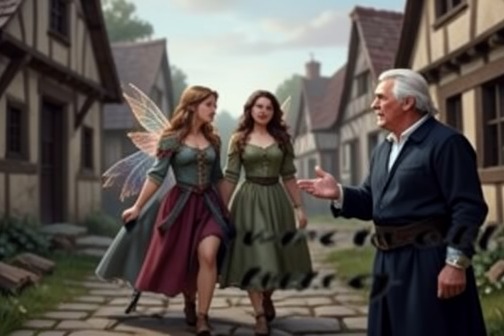
[Richards Family’s Return to Rome](entity:event-recall-event-richards-family-s-retur-97c986875290) is the turning-point journey in which [Saphira Richards](entity:character-recall-character-saphira-richards-d478b1b8aa33) and [Trevor Richards](entity:character-recall-character-trevor-richards-0559ebda84e3) return to their faery family in [Rome](entity:location-recall-location-f3877a21016f) after years of separation. What begins with an urgent request from their aunt [Rose](entity:character-recall-character-rose-154df6dd1d30) expands into a reunion with their grandmother and grandfather, the recovery of a family history interrupted by their mother’s death, and the revelation that the twins are expected to perform the færy ritual and assume the leadership for which they were originally destined. Rome therefore functions not merely as a destination but as the place where private grief becomes public inheritance.
## The Summons and the Journey
Rose sends word that Saphira Richards and Trevor Richards must visit her immediately because the matter is important. The request is striking because Rose and their father had fallen out after Saphira Richards and Trevor Richards’ mother died, leaving the family divided and communication broken. Rose does not ask their father to come; she specifically requests the twins, while allowing them to bring their mates if they wish. Her invitation thus addresses both blood relation and the new relationships the twins have formed outside Rome.
The practical urgency of the summons reinforces its importance. Rose has already mailed four first-class plane tickets, two for the twins and two additional tickets in case they bring their mates. Saphira Richards is told that the flight leaves the next morning at ten thirty, giving the family little time to deliberate. [Ashton Smith](entity:character-recall-character-ashton-smith-566fce6d6c10) agrees to accompany Saphira Richards despite initially being surprised by the Rome trip, while Trevor Richards travels with [Carmen](entity:character-recall-character-carmen-20f84f7362f5). The scene on the airplane, where Ashton Smith examines the small bag of salted peanuts supplied by the attendant, places an intimate, ordinary detail beside the extraordinary family summons: the supernatural inheritance is approached through the familiar machinery of modern travel.
## Arrival and Family Recognition
At the Rome airport, Saphira Richards recognizes Rose among the waiting crowd by the sign marked “Richards.” Trevor Richards takes responsibility for the luggage, carrying Carmen’s and his own bags as the group approaches her. Rose is described as two years younger than their mother, with black hair gathered into a messy bun and sparkling green eyes. Her physical resemblance and familiar faerie scent immediately connect the present reunion to the absent mother.
Rose’s first response is physical and unmistakably affectionate. She drops the sign and pulls Saphira Richards into a bone-crushing hug, then embraces Trevor Richards. Saphira Richards relaxes when she realizes Rose is not angry that the twins have failed to contact her for so long. The greeting therefore resolves an anxiety that preceded the journey: the twins are not returning to judgment but to recognition. Rose then turns toward Ashton Smith and Carmen, asking who the two people accompanying the twins are. Their presence makes the reunion relationally wider than a simple restoration of the blood family; the partners are brought into the circle as witnesses and potential participants.
## The Faery Village and the Recovery of Memory
Saphira Richards follows Rose into the faery village with Trevor Richards beside her, Ashton Smith holding one hand and Carmen holding the other. The village’s tents initially seem unfamiliar, but Saphira Richards accepts them as a tradition that should not be questioned. This detail presents Rome’s faery community as a culture governed by inherited practices rather than by the standards of the world the twins have inhabited elsewhere.
The villagers appear to know that Saphira Richards and Trevor Richards are coming. As they enter, people rush from their tents, and an elderly woman pushes through the crowd. The woman is their grandmother, whose wrinkles and worry lines register both age and the emotional weight of the family’s absence. She pulls the twins into a giant hug and exclaims that her grandchildren have finally come home. Saphira Richards answers her in Italian, saying that she has missed her grandmother greatly, before kissing her cheek. The exchange makes “home” more than a geographic label: it is voiced through language, touch, and the family’s immediate recognition of the twins.
The reunion is not entirely seamless. Their grandmother notices that Ashton Smith and Carmen are confused by the Italian and proposes that everyone speak English. The twins’ return therefore exposes a cultural distance created by their long absence. They belong to the village by descent, but they must still be reintroduced to its people, customs, language, and expectations.
## Inheritance, Ritual, and Leadership
The family’s welcome soon acquires a formal purpose. Their grandfather explains that Saphira Richards and Trevor Richards have been summoned to perform the færy ritual. The twins were supposed to lead their people once they reached eighteen, but their mother’s departure changed that plan. The ritual is consequently tied to a postponed succession: it marks the point at which the family’s interrupted future is restored.
This expectation parallels the other rites surrounding Saphira Richards. During the same broader period, Ashton Smith declares that he wants to undertake the full moon ritual, the ceremony through which a mate accepts a previously rejected mate and restores the mate bond. Later, [David](entity:character-recall-character-david-a0465b0b2f3d) announces before a cheering crowd that Ashton Smith will become alpha and Saphira Richards will join him as Luna. These ceremonies place Saphira Richards between two inherited systems of belonging: the faery leadership claimed through her family and the werewolf authority established through her mate bond. Her return to Rome is the moment when the first system becomes explicit.
The journey thus follows a ritual pattern of separation, threshold, and reintegration. Saphira Richards and Trevor Richards leave the world in which their family history has been muted, cross a literal threshold by plane, and enter the village where their identities are publicly confirmed. The tents, the ancestral language, the grandmother’s embrace, and the proposed færy ritual all transform private ancestry into collective status. The return does not erase the years of absence or the damage caused by their mother’s death, but it gives those losses a social setting in which they can be remembered and incorporated.
## Memory, Danger, and Renewed Belonging
Saphira Richards recognizes that Rose’s voice resembles their mother’s so strongly that being near her had once been difficult. By the time of the return, she believes she has overcome much of that pain. In Rome, she hopes to learn to handle the resemblance more constructively and to remember her mother without thinking only of the sad parts. The family reunion therefore has an inward consequence as well as a political one: it offers Saphira Richards a way to revise memory from pure bereavement into continuity.
That continuity is tested by the dangers that follow. The arrow that strikes Saphira Richards is revealed to have been coated in poison, turning the return period from a homecoming into a vulnerable stage in the larger conflict. Trevor Richards later lies limp and gravely ill, and Saphira Richards must beg Carmen for more than five minutes alone with him; Carmen has not slept and is barely eating. The family’s restored connections are consequently expressed through care as much as ceremony.
The return also intersects with Saphira Richards’ pregnancy and her continuing determination to act. When Trevor Richards warns that she cannot lead an army because she is pregnant, Saphira Richards answers that she is half faery and can cast a protective charm on herself. Her response shows that the Rome reunion has not made her passive or merely ceremonial. It has placed her within an inherited community while leaving her responsible for deciding how family, pregnancy, leadership, and danger can coexist.
By the later reunion with Ashton Smith, Saphira Richards moves toward him without hesitation and throws herself into his arms; he is careful around her stomach as he says that he missed her. The gesture joins the event’s two central forms of return. Saphira Richards has returned to the family from which she was separated, and she also returns emotionally to the mate relationship that has repeatedly been broken and restored. Rome’s decisive significance lies in this double movement: it reconnects the twins to their lineage while preparing Saphira Richards to carry that lineage forward through ritual, leadership, memory, and chosen bonds.
Event 7
Færy Leadership Ritual

The [Færy Leadership Ritual](entity:event-recall-event-f-ry-leadership-ritual-3c99c307fe35), also known as the Ancient Cup Ritual, is the [Færy Clan](entity:organization-recall-organization-f-ry-clan-8fbbf6eb0951)’s formal method of transferring authority from one leader to another. Its decisive significance lies in the way it makes leadership a visible moral judgment rather than merely an inherited position: the prospective leader’s blood is placed in an Ancient Cup, whose color reveals whether that person possesses a pure heart and benevolent intentions. The ceremony therefore joins succession, bodily sacrifice, ancestral tradition, and collective witness in a single public test.
## Purpose and Ancestral Design
The ritual is introduced when [Saphira Richards](entity:character-recall-character-saphira-richards-d478b1b8aa33) and [Trevor Richards](entity:character-recall-character-trevor-richards-0559ebda84e3) are summoned to their grandfather’s tent. Their grandfather explains that both were expected to lead their kind once they reached eighteen, but that the succession had been altered after their mother left them. Instead of treating leadership as an automatic family entitlement, the Færy Clan requires the two of them to perform the Færy Leadership Ritual. The ceremony is defined as the passing of leadership from one person to another, placing the transfer within an established system rather than presenting it as a private family decision.
The standards of that system were established by the Færy Clan’s ancestors. They enchanted one hundred cups for use in the ritual, and these vessels later became known as the [Ancient Cups](entity:object-recall-object-ancient-cups-b87035dad2a5). The cups preserve the ancestors’ judgment within the ceremony itself: the original leader or leaders contribute a drop of blood, and the new leader contributes a drop as well. The ritual thus connects the body of the outgoing authority to the body of the successor, while the enchanted cup becomes the instrument that interprets the successor’s character before the watching community.
## The Blood Test and Its Meaning
The Ancient Cup does not simply confirm rank. It evaluates intention. If the new leader has a pure heart and only good intentions toward the Færy Clan, the cup glows a piercing blue. If the candidate has a dark heart and dark intentions, it glows a raging red. The color creates a stark moral division within the succession process, turning an invisible quality of character into a public and unmistakable sign. Leadership is consequently represented as an ethical responsibility whose legitimacy must be demonstrated through the candidate’s own blood.
The ceremony also makes the candidate’s body part of the political transition. A young woman asks Saphira Richards for her hand and cuts her palm with a dagger before she approaches the Ancient Cup. [Saphira](entity:character-recall-character-saphira-ed60c2eb7974) squeezes her hand over the vessel until a drop of blood falls into it, then wipes the wound with a wet towel. Trevor Richards undergoes the same procedure, and his injury draws a slight growl from [Carmen](entity:character-recall-character-carmen-20f84f7362f5). The reactions around them show that the ritual’s controlled violence is not emotionally neutral: the crowd accepts the bloodletting as necessary, but those close to the participants respond protectively to the physical cost of succession.
## [Sondra](entity:character-recall-character-sondra-ed18f2adfac3)’s Confirmation
The ceremony reaches its clearest resolution when Sondra’s hand is cut and her blood is held over the cup. The moment is experienced as prolonged and tense, with the gathered people holding their breath until the drop finally strikes the bottom. The Ancient Cup immediately begins to glow piercing blue. The crowd erupts into cheers, and Sondra responds with a gigantic smile, transforming the ritual from a dangerous test into a communal celebration.
The blue light confirms that Sondra possesses the purity of heart and good intentions required by the ancestral standard. She will become the new leader of the clan once she reaches eighteen, rather than assuming the position immediately. Saphira Richards concludes that Sondra will be a great leader, so the ceremony establishes both institutional succession and personal confidence in Sondra’s future rule. Yet the celebration is abruptly interrupted when the [Banshees](entity:character-recall-character-banshees-fb983a4bf84e) arrive, placing the newly confirmed succession under immediate external threat.
## Ceremony as Collective Judgment
The Færy Leadership Ritual is not completed by blood alone; it requires a community capable of witnessing, interpreting, and accepting the result. Saphira Richards and Trevor Richards are brought into the setting by their grandfather, who explains the ceremony and announces that it must take place that very night. The compressed timing gives the succession a sense of urgency, while the gathered crowd turns a family inheritance into a public act. The ritual’s authority therefore comes from several sources at once: the ancestors who enchanted the cups, the elders who administer the ceremony, the candidates who submit their bodies, and the people whose response confirms the result as a communal fact.
## Ritual Structure and Political Meaning
The Færy Leadership Ritual also establishes a striking contrast between inherited expectation and earned legitimacy. Saphira Richards and Trevor Richards had been expected to lead the Færy Clan at eighteen, but their mother’s departure disrupted that anticipated succession and required their grandfather to summon them for a formal transfer of authority. The ceremony therefore acknowledges lineage without allowing lineage to settle the question by itself. The Ancient Cups, created and enchanted by the ancestors, preserve a standard that stands above any individual family member: blood identifies the candidate, but the cup’s response determines whether that candidate’s intentions meet the moral demands of leadership.
The ritual’s repeated physical actions give this political judgment a disciplined form. A designated young woman cuts each participant’s hand with a dagger, the candidate holds the wounded hand above the cup, and a single drop falls into the vessel. Saphira Richards compresses her hand to produce the drop, cleans the blood with a wet towel, and watches the same process take place for Trevor Richards. When Trevor Richards is cut, Carmen reacts with a slight growl, revealing that the ceremony’s official solemnity coexists with intimate fear for the participants’ bodies. The wound is small, but it makes authority tangible: succession is not an abstract announcement but a change enacted through pain, blood, and submission to a communal procedure.
The ceremony also turns private moral qualities into publicly legible political facts. A pure heart and good intentions produce a piercing blue glow, while a dark heart and dark intentions would produce a raging red one. This binary sign leaves little room for an ambiguous public interpretation. When Sondra’s blood finally reaches the Ancient Cup, the prolonged suspense breaks into blue light and collective cheering, and her gigantic smile marks the emotional completion of the transition. The result does not make her leader immediately; it confirms that she will assume leadership once she reaches eighteen. In that sense, the ritual both defers power and secures its future, giving the clan a recognized successor while presenting Sondra’s character as the foundation of her coming rule.
## Ritual Structure and Political Meaning
The Færy Leadership Ritual establishes a sharp contrast between inherited expectation and earned legitimacy. Saphira Richards and Trevor Richards were expected to lead the Færy Clan when they reached eighteen, but their mother’s departure disrupted that anticipated succession and led their grandfather to summon them for a formal transfer of authority. The ceremony acknowledges lineage without allowing lineage to settle the question by itself. The Ancient Cups, enchanted by the ancestors, preserve a standard that stands above any individual family member: blood identifies the candidate, but the cup’s response determines whether that candidate’s intentions meet the moral demands of leadership.
Its repeated physical actions give this political judgment a disciplined form. A designated young woman cuts each participant’s hand with a dagger, the candidate holds the wounded hand above the cup, and a single drop falls into the vessel. Saphira Richards squeezes her hand to produce the drop, cleans the blood with a wet towel, and watches the same process take place for Trevor Richards. When Trevor Richards is cut, Carmen reacts with a slight growl, revealing that the ceremony’s official solemnity coexists with intimate fear for the participants’ bodies. The wound is small, but it makes authority tangible: succession is not an abstract announcement but a change enacted through pain, blood, and submission to a communal procedure.
The ceremony turns private moral qualities into publicly legible political facts. A pure heart and good intentions produce a piercing blue glow, while a dark heart and dark intentions would produce a raging red one. When Sondra’s blood reaches the Ancient Cup after a prolonged moment of suspense, the blue light and the crowd’s cheering transform uncertainty into collective recognition. Her gigantic smile marks the emotional completion of the test, although the political transition remains prospective: she will become the clan’s new leader once she reaches eighteen. The ritual therefore both defers power and secures its future, giving the Færy Clan a recognized successor while presenting Sondra’s character as the foundation of her coming rule.
Event 8
Banshee Attack on the Færy Village
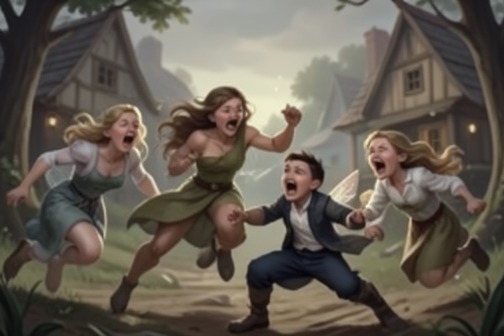
The [Banshee Attack on the Færy Village](entity:event-recall-event-banshee-attack-on-the-f-1a16c316d5fa) is a sudden assault that shatters a moment of confidence in the village’s future. Its deadly screams make the attack a physical threat to the whole community, while [Saphira](entity:character-recall-character-saphira-ed60c2eb7974)’s efforts to protect her family and save [Sondra](entity:character-recall-character-sondra-ed18f2adfac3) turn the crisis into a test of who can act when ordinary safety collapses.
## Causes and Background
The assault begins just as Saphira believes nothing can spoil the moment. She has been thinking about Sondra, who is expected to become the clan’s leader when she turns eighteen, and is certain that her cousin will lead well. The attack therefore interrupts not only a gathering in the village but a vision of continuity: Sondra’s anticipated future is suddenly at risk before she has reached the age at which she can assume leadership.
Screams erupt across the village as the [Banshees](entity:character-recall-character-banshees-fb983a4bf84e) arrive. Saphira understands them as the [Faeries](entity:creature-recall-creature-faeries-b1623bff73d3)’ natural foes, and their cries are more than a warning or display of hostility: the sound rises to a pitch that can kill those exposed to it for too long. She also knows that a Banshee usually screams before someone dies. That association gives the invasion an immediate, grim meaning. The villagers are not merely hearing danger approach; the sound signals that death may already be near.
## The Attack and Saphira’s Response
The invasion becomes personal when Saphira sees a Banshee standing over her grandparents and screaming. Their age and weaker bodies make them especially vulnerable to a sound that can cause death; when Saphira removes her hand from her ear to act, the shriek presses in so violently that she feels as if her brain might explode. She nevertheless flings out a hand and silently whispers a movement charm, hurling the attacker away from her grandparents and into a nearby tree. Only then does she cover her ear again. Blood is already running from both grandparents’ ears, a visible measure of how much the sound has injured them.
Saphira temporarily charms herself against hearing and immediately searches for Sondra, whose expected future as clan leader gives her safety particular urgency. She finds her cousin curled in a fetal position with her hands pressed to her ears, while a Banshee has seized her leg and is dragging her toward the Banshees’ village. The boundary between the villages lies several miles away. Saphira runs after them at full speed, even as the charm begins to wear off and the scream returns faintly to her awareness.
[Trevor](entity:character-recall-character-trevor-6629d67e0e5b) joins the rescue. Saphira signals him to get Sondra back at any cost, thinking of her as both cousin and family; her resolve is framed as a refusal to leave family behind or let them be kidnapped. Trevor advances directly on the Banshee and tackles it, knocking Sondra from its shoulder onto the ground. The attacker pushes Trevor away and turns back toward Sondra, but a tall ring of fire encircles it before it can reach her. The rescue is therefore not a single decisive blow: Sondra is brought down from the captor, then remains in danger until the fire intervenes.
When the flames die down, the Banshee steps toward Saphira and opens its mouth to scream. Before it can release the sound, an arrow strikes it in the head. The attacker falls, and dust rises around its body until it disappears entirely. Saphira looks up to see [Ashton](entity:character-recall-character-ashton-b17e2cb78e23) holding a crossbow in his limp right hand; he is breathing heavily, with cuts across his face and arms and a limp in his left leg. He reports that the Banshees have all vanished into clouds of dust, a sudden end to the assault that leaves him visibly confused. Saphira’s immediate concern is whether everyone is safe, but the question carries dread: the attack has already left her grandparents bleeding and her cousin narrowly rescued.
## The Poisoned Arrow and the Aftermath
The Banshees’ disappearance ends the visible assault, but not its danger. In the aftermath, a doctor tells Ashton that the arrow that struck Saphira was coated with poison. The disclosure turns the attack’s apparent conclusion into a new emergency: the weapon that helped stop a Banshee has also left Saphira poisoned, and Ashton’s shock at the news makes clear that the threat has reached beyond the village’s wounded and the rescue of Sondra. The invasion thus leaves its harm behind even after its attackers have vanished.
## Different Defenses Against the Scream
The attack also exposes how survival depends on different ways of resisting the same weapon. [Werewolves](entity:creature-recall-creature-werewolves-8de514e497c0) can use one sound to block out another, and Ashton is already doing so when Saphira notices him; she, by contrast, relies on a charm that temporarily shuts off her hearing. The distinction matters because neither defense makes the assault harmless: Saphira’s charm begins to wear off while she pursues Sondra, and she has to choose action despite the returning sound. Against the Banshees’ lethal cries, protection is provisional, and rescuing someone means entering the range of the danger rather than escaping it.
Event 9
Saphira’s Poisoning and Recovery
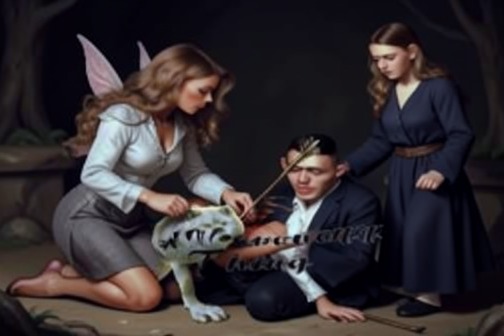
[Saphira’s Poisoning and Recovery](entity:event-recall-event-saphira-s-poisoning-and-06409c8331ad) is the event in which [Saphira](entity:character-recall-character-saphira-ed60c2eb7974) is struck by an arrow during the aftermath of a Banshee attack, discovers that the wound is poisoned, and survives a narrowly measured medical crisis. Its decisive significance lies in the reversal from apparent reassurance to possible death: Saphira is able to speak only briefly before collapsing, while the doctor’s warning gives her recovery an explicit deadline and transforms [Ashton](entity:character-recall-character-ashton-b17e2cb78e23)’s presence from emotional support into a vigil beside a potentially dying mate.
## Causes and Background
The immediate danger arises after Saphira has been inspected and asked whether she is unharmed. She begins to answer that she is fine, but pain cuts through the sentence. Looking down, she sees an arrow protruding from her torso. The wound is therefore not an abstract threat or a delayed illness; it is a visible consequence of the attack, discovered at the precise moment when she and those around her are trying to assess whether the violence has ended.
Saphira’s collapse also carries the force of earlier loss. When she meets [Trevor](entity:character-recall-character-trevor-6629d67e0e5b)’s eyes in another moment of distress, the pain recalls the only previous occasion on which the same bodily reaction had overtaken her: the death of her mother, whose news Trevor had received before Saphira did. That association places the poisoned-arrow incident within a recurring pattern in which grief is registered physically. Breathlessness, pain, and the fear of losing someone are not separate elements in Saphira’s experience; they converge whenever family danger threatens to become irreversible.
The injury becomes more dangerous because the attack is not fully over. Saphira realizes that not all the [Banshees](entity:character-recall-character-banshees-fb983a4bf84e) have disappeared, making the arrow a sign that the enemy’s presence persists even after the immediate fighting seems to have receded. The event thus joins battlefield uncertainty to medical uncertainty: Saphira cannot know whether the assault has ended, and the others cannot initially know whether the arrow has done more than wound her.
## The Poisoned Wound and Medical Crisis
Saphira falls after making eye contact with Trevor. From her perspective, the narrative then shifts into bodily confusion and near-darkness. She is unsure whether she is on the brink of death or beginning to pull through, knows only that her body hurts, and recognizes that the arrow has caused far more pain than it should have. The darkness and inability to open her eyes make consciousness itself unstable, turning the scene into a fragmented account of survival from inside the injured body.
The hidden cause is disclosed through the doctor’s warning rather than through Saphira’s own immediate understanding. The arrow was coated in poison, described as very dangerous, and the doctor tells Ashton that if Saphira does not wake within an hour, she may be lost. This deadline changes the meaning of her unconsciousness. She is not merely sleeping or recovering from shock; she is in a race against a poison whose outcome has been reduced to a narrow period of time.
The diagnosis also produces a visible shock in Ashton. His reaction is so abrupt that a chair hits the ground, while Saphira, hearing the warning from within her impaired state, understands that death is a real possibility. After the doctor’s statement, hearing leaves her body, and her attempt to restore it fails. The loss of sound becomes a formal expression of the crisis: information arrives with devastating clarity, then the world withdraws before Saphira can answer it.
## Ashton’s Vigil and Saphira’s Awakening
Even while she is unable to see or hear reliably, Saphira remains oriented toward Ashton. She feels someone take her hand; tingling spreads through her, and she knows that it is Ashton. His touch does not erase the poison or guarantee recovery, but it gives the unconscious scene a relational anchor. Her effort to wake is therefore connected not only to physical endurance but also to the recognition that Ashton is present and waiting for her.
The reversal comes when Saphira opens her eyes and sees a bright light. At first she thinks death may already have taken over, but Ashton’s voice proves that she has awakened. She blinks until the scene comes into focus and realizes that she is in the færy hospital tent. The setting confirms both the severity of the injury and the existence of organized care capable of carrying her through the crisis.
Her first spoken reassurance is simple: she tells Ashton that she is okay and smiles up at him. His face takes on a relieved expression, and he thanks the moon goddess before bending down to embrace her. The embrace is the emotional release of the event’s central reversal. The doctor’s hour has not ended in loss; the feared absence has become recognition, speech, and physical closeness.
## Recovery, Protection, and Bodily Consequences
Recovery does not make Saphira’s body invulnerable. Later, when she reveals to Trevor that she is pregnant, she explains that she cannot afford to be hurt and that serious injury to either of them might affect her baby. The poisoned-arrow crisis therefore acquires a second meaning: it has established the seriousness of bodily danger before pregnancy makes the stakes even more explicit. Saphira’s body becomes the meeting point of personal survival, family continuity, and responsibility for another life.
That responsibility generates conflict rather than simple agreement. Trevor tells Saphira that she cannot lead an army while pregnant, attempting to convert concern for her safety into a restriction on her actions. Saphira rejects the conclusion, pointing to her half-færy identity and her ability to cast a protective charm on herself. Her recovery consequently does not end in passive dependence. It becomes part of an argument over who may determine the limits of her body and leadership.
The same protective logic recurs when a rogue appears. Saphira steps backward, growls menacingly, and tries to shield her stomach. The gesture shows that the memory of danger has been redirected toward protecting the pregnancy, even as it reveals her continued readiness to confront threats. Protection is thus both something others impose on Saphira and something she actively performs herself.
## Narrative and Relational Significance
The event’s structure follows a sharp value reversal. Saphira moves from the expectation that she can answer a question about her condition to a fall caused by an arrow; from injury to the possibility of death; and from sensory isolation to awakening in Ashton’s presence. The doctor’s one-hour limit supplies the crisis with a measurable threshold, while the poisoned arrow converts the visible wound into an unseen threat. Recognition comes in stages: Saphira recognizes the wound, the doctor reveals the poison, and Ashton’s voice finally confirms that she has returned to consciousness.
The incident also intensifies the relationship between Saphira and Ashton without resolving every question about protection and autonomy. His hand, his relief, his thanks to the moon goddess, and his embrace make care tangible, while Saphira’s later resistance to being barred from leadership shows that survival has not made her surrender agency. When she later throws herself into Ashton’s arms, he wraps them around her carefully because of her stomach, and their reunion is shaped by both longing and caution. The tenderness is not detached from danger; it is the form tenderness takes after danger has made the body newly legible as fragile.
Saphira’s poisoning therefore functions as more than an isolated injury. It links the violence of the Banshee attack to the intimate experience of nearly losing a mate, connects present pain with the remembered death of Saphira’s mother, and foreshadows the protective disputes surrounding pregnancy and war. Her recovery restores breath, consciousness, and contact, but the event leaves behind a permanent narrative knowledge: survival is possible, yet never guaranteed, and love is repeatedly expressed through the struggle to protect a life without deciding its entire future for it.
Event 10
Alpha and Luna Succession Ceremony

The [Alpha and Luna Succession Ceremony](entity:event-recall-event-alpha-and-luna-successi-136e42178f59) is the public transfer of pack leadership to [Ashton Smith](entity:character-recall-character-ashton-smith-566fce6d6c10) and [Saphira Richards](entity:character-recall-character-saphira-richards-d478b1b8aa33). Its decisive significance is that it joins political succession to intimate recognition: [Ashton](entity:character-recall-character-ashton-b17e2cb78e23) becomes alpha, while his mate is formally announced as Luna. The ceremony therefore does more than replace an older leader. It gives public, collective form to the couple’s restored bond and makes [Saphira](entity:character-recall-character-saphira-ed60c2eb7974)’s identity part of the pack’s institutional future.
## Causes and Background
The succession follows a period in which Saphira and Ashton’s relationship has been unsettled and then repaired. Ashton had rejected Saphira, but later asked her to undergo the full moon ritual, which restores the mate bond when the rejecting mate marks the rejected partner at the height of the closest full moon after the rejection. The ceremony consequently occurs against the background of reconciliation rather than uncomplicated romance. Saphira wants the bond restored, and the later succession gives that private restoration a political consequence.
The ceremony is also connected to the wider obligation surrounding Saphira and [Trevor Richards](entity:character-recall-character-trevor-richards-0559ebda84e3). Their grandfather summons both twins to perform the [Færy ritual](entity:concept-recall-concept-f-ry-ritual-b40016872b73), explaining that they were expected to lead their people when they reached eighteen, but that their mother’s departure changed the circumstances. This parallel inheritance claim places Saphira between several forms of authority: she is a member of the family expected to lead the Færy, Ashton’s mate within the wolf pack, and the woman about to be made Luna. The succession is thus part of a larger story in which family history, supernatural identity, and public leadership repeatedly overlap.
## Course of the Ceremony
The event takes place on the night of the Luna and alpha ceremony, after Saphira and Ashton have been home for five days. Saphira is more nervous than she expected. She helps Ashton fix his tie, notices that he watches her intently, and then takes his hand as they walk toward the podium in the backyard. The clothing and the movement toward the podium give the scene a carefully prepared public character, while Saphira’s anxiety shows how exposed the transition makes her feel.
As they pass through the assembled pack, Saphira struggles not to panic, phase, and charge into the woods. Her fear is not presented as doubt about Ashton alone; it is fear of being publicly named and required to inhabit an unfamiliar office. She looks toward [Trevor](entity:character-recall-character-trevor-6629d67e0e5b), who answers her nervousness with a broad smile and two thumbs up. His silent encouragement gives the ceremony a family dimension and helps connect Saphira’s new position to the twin relationship that has supported her elsewhere in the plot.
[David](entity:character-recall-character-david-a0465b0b2f3d), the current alpha and Ashton’s father, presides over the announcement. He declares that the pack will have a new alpha and Luna, and the crowd answers with cheers and wolf whistles. He then names Ashton Smith as the new alpha and announces that his mate, Saphira Richards, will join him as Luna. The declaration is performative in the strongest sense: the words do not merely describe a change already complete but publicly enact the transfer before the pack’s collective witness.
## Participants and Stakes
David’s role as the soon-to-be former alpha makes the succession an orderly generational transfer. Authority moves from father to son rather than being seized in a visible contest. His pride in the announcement also frames Ashton’s elevation as an occasion of communal approval. The crowd’s loud response turns private inheritance into social legitimacy, showing that the new leadership depends not only on bloodline or mate status but also on recognition by the pack.
Saphira’s position is more complicated than the title alone suggests. She is announced as Luna because she is Ashton’s mate, yet the moment requires her to accept a public responsibility she finds nerve-racking. Her reaction reveals that succession is embodied: she must walk beside Ashton, endure the attention of the crowd, and allow a collective institution to redefine how others see her. The ceremony transforms her from a woman negotiating a damaged relationship into a visible partner in rule.
The later consequences clarify that the title does not erase conflict over Saphira’s agency. After her pregnancy is revealed, Trevor warns that she cannot lead an army because she is carrying a child. Saphira responds that she is half Færy and can cast a protective charm, then insists that if she and Trevor are the chosen figures in the prophecy, she will fight whether he approves or not. Her argument shows that becoming Luna does not make her passive or remove her desire to act. Instead, leadership becomes a contested question involving pregnancy, protection, prophecy, and her own authority to decide what risks she will take.
## Consequences and Aftermath
The ceremony gives Saphira a new source of confidence through her connection with Ashton. When he is beside her and their eyes meet, she knows she will be all right and believes she can be a good Luna. Her certainty is relational, but it is not merely dependent: the public role becomes imaginable because she interprets their partnership as a basis for her own capacity to lead. She also recognizes the intensity of her feelings for Ashton, describing her love as undeniable, unconditional, and dangerous.
The succession is followed by a period in which care and danger remain intertwined. Saphira’s pregnancy makes the leadership arrangement carry future dynastic implications, while her insistence on participating in the anticipated fight challenges attempts to protect her by excluding her. The protective impulse also appears in Ashton’s later reunion with her: when Saphira throws herself into his arms, he wraps them around her carefully because of her stomach. Affection is therefore expressed through physical caution, but the broader narrative refuses to let caution settle the question of Saphira’s choices.
The ceremony’s importance extends into the family future. Years later, Saphira is shown in a domestic scene with her six-year-old daughter, [Crystal](entity:character-recall-character-crystal-bc6bb32b6e08). The image of Saphira as a mother does not cancel her earlier public identity as Luna; it places succession, pregnancy, and family continuity within the same long arc. The ceremony becomes one point in a chain linking the pack’s present leadership to the next generation.
## Narrative Significance
As an event, the Alpha and Luna Succession Ceremony joins three kinds of transformation: Ashton’s elevation, Saphira’s public acceptance, and the conversion of a restored mate bond into a governing partnership. Its structure moves from private preparation to collective declaration. Saphira fixes Ashton’s tie and walks with him; David speaks before the crowd; the pack answers; and Saphira’s inward panic gives way to confidence when she looks at Ashton. The scene’s value shift is from anxious exposure to publicly affirmed belonging.
The ceremony also establishes a recurring contrast in the story’s treatment of leadership. Rituals promise stability by naming identities and placing them before witnesses, but the people receiving those identities remain physically vulnerable, emotionally changeable, and capable of resisting the roles others assign them. Saphira can be formally made Luna and still argue over whether she may fight. She can be pregnant and still insist on political and military agency. In that tension, the ceremony becomes more than a coronation: it is the moment when public authority is granted, while the struggle over how that authority will actually be lived remains open.
Event 11
Discovery of Saphira’s Pregnancy

[Discovery of Saphira’s Pregnancy](entity:event-recall-event-discovery-of-saphira-s-c69a1dbca27e) is a decisive recognition scene in which an unexplained physical reaction becomes the knowledge that [Saphira](entity:character-recall-character-saphira-ed60c2eb7974) is carrying a child. [Amanda](entity:character-recall-character-amanda-f7c90eb37305)’s detection of another heartbeat and the positive pregnancy test transform Saphira’s body from a private concern into the center of family expectations, medical danger, protective behavior, and arguments over whether she may participate in war.
## Symptoms, Recognition, and Confirmation
Saphira’s pregnancy is first registered through her body. She wakes beside [Ashton](entity:character-recall-character-ashton-b17e2cb78e23), briefly smiling at his disordered hair and soft snoring, then feels the smile disappear as bile rises in her throat. She runs to the bathroom, barely reaches the toilet, and vomits. After brushing her teeth, she finds Amanda waiting outside the door. Amanda places a hand on Saphira’s stomach and listens rather than relying only on Saphira’s report of illness.
Amanda identifies the decisive sign: she hears another heartbeat coming from inside Saphira. The statement turns nausea into a possible pregnancy, but Saphira still needs confirmation. She rushes to a small drug store in Ashton’s car, buys a pregnancy test, and goes directly to the bathroom to use it. The test displays a tiny purple plus sign. Saphira stares at it, then recognizes the result plainly: she is pregnant, she will become a mother, and Ashton will become a father.
## The Immediate Private Crisis
The discovery does not produce uncomplicated celebration. Saphira immediately wonders whether Ashton will be happy or whether he will not yet want to be a father. That uncertainty makes the revelation stressful before Ashton has even been told. She puts the test, still marked by the purple plus sign, into her back pocket, starts the car, and drives home because she knows she must tell him.
The scene therefore moves through three levels of knowledge. Saphira first experiences an involuntary symptom, Amanda gives the symptom a possible meaning by identifying the second heartbeat, and the test supplies material confirmation. The pregnancy is not introduced through a formal announcement or ceremony; it emerges through vomiting, touch, listening, hurried travel, and a small visible sign carried close to Saphira’s body.
## [Pregnancy](entity:state-recall-state-pregnancy-cdafbf158725) and the Ethics of Protection
The pregnancy quickly alters the meaning of physical danger. When Saphira has been struck by an arrow, a doctor tells Ashton that the arrow is coated in poison. The disclosure makes the earlier injury more serious, because the threat is no longer confined to Saphira’s body. Elsewhere, Saphira tells [Trevor](entity:character-recall-character-trevor-6629d67e0e5b) that she cannot afford to be hurt and that he cannot afford to be seriously injured either, because harm to him might affect her baby. Her pregnancy consequently creates a protective network that reaches beyond the mother and unborn child to the twin relationship between Saphira and Trevor.
Protection also appears in more intimate gestures. When Saphira encounters a rogue with pitch-black eyes and matching hair, she steps backward, growls, and attempts to shield her stomach. Later, when Ashton finds her, she throws herself into his arms; he embraces her carefully around her stomach. The contrast is sharp: against the rogue, shielding is defensive and instinctive, while with Ashton it becomes a sign of restored closeness and cautious tenderness.
The pregnancy also intersects with caregiving under extreme strain. Trevor is beaten with a leather whip, and Saphira must beg [Carmen](entity:character-recall-character-carmen-20f84f7362f5) for more than five minutes to receive an hour alone with his limp body. His pale, sweat-matted appearance and Carmen’s exhaustion frame care as physical labor rather than abstract affection. The pregnancy intensifies this ethic of care while also making Saphira vulnerable to decisions made by others in her name.
## Leadership, [War](entity:state-recall-state-war-cd0f0998679c), and Bodily Autonomy
The most explicit conflict follows when Trevor tells Saphira that she must not fight because she is pregnant and therefore cannot lead an army. His argument treats pregnancy as a reason to remove her from military and political action. Saphira rejects that conclusion. She insists that, as a half-faery, she can cast a protective charm on herself, and when Trevor continues to object, she declares that if they are the chosen ones, she will fight whether he approves or not.
This exchange makes the pregnancy more than a family development. It becomes a test of who has authority over Saphira’s body and public role. Trevor’s concern is framed as protection, but Saphira experiences it as an attempt to stop her from helping in the conflict. Her response preserves both dimensions of the revelation: she acknowledges the baby’s vulnerability by discussing protective magic, yet refuses to let pregnancy erase her agency, leadership, or responsibility to the larger struggle.
## Family Future and Retrospective Meaning
The later glimpse of Saphira with her six-year-old daughter [Crystal](entity:character-recall-character-crystal-bc6bb32b6e08) confirms that the pregnancy leads to a lasting family future rather than remaining an unresolved threat. Years afterward, Crystal enters the kitchen and calls Saphira “Mommy” while Saphira prepares chicken in the oven. The domestic scene gives the earlier purple plus sign its eventual consequence: the feared and uncertain future becomes an established mother-daughter relationship.
At the same time, the discovery remains connected to the book’s recurring pattern of bodily vulnerability. Saphira’s pain when Trevor is suffering, her arrow wound and poisoning, her nausea, the second heartbeat, her defensive shielding of her stomach, and the careful embrace from Ashton all make the body a conduit through which relationships are perceived and reorganized. The pregnancy thus changes the stakes of danger without reducing Saphira to a passive patient. It establishes a future child, exposes anxieties about Ashton’s readiness for fatherhood, strengthens protective bonds, and provokes a direct dispute over whether care should mean support or control.
## Narrative Significance
As an event, Discovery of Saphira’s Pregnancy functions as an anagnorisis: scattered physical evidence becomes a fact that reorganizes the plot. Amanda’s touch and hearing initiate the recognition, the test confirms it, and subsequent scenes repeatedly force characters to respond to its implications. The event shifts the value at stake from Saphira’s individual safety to the survival and status of a family that has not yet fully come into being.
Its significance is also deliberately double. Pregnancy promises continuity, culminating in Crystal’s later appearance, but it arrives amid poisoning, captivity, rogue violence, and the threat of war. It supplies hope while increasing exposure to danger. Most importantly, the event refuses to resolve the tension between protection and autonomy: Ashton’s careful embrace offers reassurance, Trevor’s warning becomes a restriction, and Saphira answers both with a determination to defend the child without surrendering her right to choose.
Event 12
Ravenous Pack Attack

[Ravenous Pack Attack](entity:event-recall-event-ravenous-pack-attack-6432a9d992cb) is the decisive military confrontation in which the [Ravenous pack](entity:character-recall-character-ravenous-pack-4fcdd4591932) invades the territory of [Ashton](entity:character-recall-character-ashton-b17e2cb78e23)’s pack. Announced as an unexpected emergency at the pack house, the assault transforms long-standing hostility into open violence. It also becomes a crisis of loyalty and protection: Ashton must mobilize the pack, [Saphira](entity:character-recall-character-saphira-ed60c2eb7974) refuses to remain safely removed from the fighting, and the discovery of [Simon](entity:character-recall-character-simon-99ba1396ec7a)’s apparently lifeless body shows that the conflict has consequences far beyond a contest between rival groups.
## Causes and Background
The attack is not presented as an isolated provocation. The Ravenous pack has never liked Ashton’s pack, and the narrative identifies that hostility as the immediate background to its decision to strike. The timing gives the event an especially abrupt quality: the community is gathered at the pack house when alarms and disturbance announce that the enemy is already close. The conflict therefore begins with a breach of expected territorial security rather than with a formal challenge or extended negotiation.
The two groups are also distinguished through their bodies. When Saphira reaches the battlefield, the attacking wolves appear dirty and sick, while the wolves belonging to Ashton’s pack look clean and healthy. Their eyes provide the sharpest visible difference: members of Ashton’s pack retain the eye color associated with their human forms, whereas the Ravenous wolves have sickly pale-white eyes regardless of their human coloring. These details make the rivalry seem like a conflict between recognizable communities, but they also risk turning social hostility into a bodily opposition between supposedly healthy and diseased kinds.
## Mobilization and Course of the Battle
The crisis is announced when Ashton enters the pack house with [Aiden](entity:character-recall-character-aiden-b4bb3917d0f7) and [Trevor](entity:character-recall-character-trevor-6629d67e0e5b). His hair is disheveled and sweat marks his hairline, physical signs that he has come directly from urgent action rather than from a position of calm authority. He declares that the Ravenous pack has attacked. He then orders the pack warriors to prepare themselves, explaining that the enemy is close and must be intercepted in the forest before reaching their territory. Pack members rush outside, phase into their wolf forms, and charge toward the forest.
Saphira does not stay behind. She runs toward the area of the attack, searching for Ashton because she wants to speak sense to him and prevent him from doing anything reckless. Her motive is not merely strategic. She is trying to protect the person who has become central to her life while also confronting the danger directly. When she finds Ashton’s large wolf, she pushes herself to catch up rather than waiting for the battle to resolve around her.
The encounter becomes fully visible only when Saphira stops at the edge of the fighting. She can distinguish the wolves of Ashton’s pack from the Ravenous attackers by their contrasting appearance, and then watches Ashton charge forward and join the combat. She positions herself to lunge as well, but a wolf beside her suddenly growls, leaps onto her, and bites down on her neck before she can turn. The attack thus places Saphira in the role of both witness and target: her attempt to enter the defense of the territory immediately exposes her to the enemy’s violence.
## Family, Protection, and Loss
The battle is also shaped by the pack mind link and by the protective logic of intimate bonds. Ashton’s concern that Saphira might be hurt through their bond leads him to turn away from the battle and run back toward the house. His retreat is not simple cowardice or abandonment; it is a protective response in which Saphira’s physical safety becomes inseparable from his own ability to continue fighting. The bond makes distance impossible, but it also complicates military duty by forcing him to respond to the danger threatening one particular person.
Saphira nevertheless continues toward the fighting, determined to make sure that Ashton does not act foolishly. On the route she passes several limp werewolves and stops when she reaches one of her own pack. The body is the source of the howl that drew attention to the area, but her search for signs of life finds none. The fallen brown wolf is identified as Simon. His apparent death gives the attack its most devastating consequence and turns the scene from a territorial clash into a personal catastrophe for the pack and for Simon’s relationships.
The event’s wider context makes Simon’s fate especially charged. The surrounding story has already established violent boundaries between werewolves, vampires, [Faeries](entity:creature-recall-creature-faeries-b1623bff73d3), and [Banshees](entity:character-recall-character-banshees-fb983a4bf84e). Saphira reacts protectively when she realizes that the girl accompanying Simon is a vampire, while Simon protects the vampire in return because she is his mate. That cross-species bond stands in direct contrast to the Ravenous attack’s division of communities into hostile categories. Against this background, Simon’s fall suggests how fragile such connections remain when collective identity is organized through species and territory.
## Consequences and Aftermath
Ravenous Pack Attack leaves the pack with casualties and forces its leaders to treat the forest as an active war zone. The order to intercept the Ravenous wolves before they reach the territory reveals that the immediate objective is containment, but the battle demonstrates that containment cannot prevent intimate loss. Saphira’s injury and Simon’s apparent death show that the danger reaches both the fighters and the family networks surrounding them.
The attack also foreshadows a larger supernatural conflict. A later prophecy states that a war will occur on the night when the sun is black and stars cross the sky, and that the struggle will be between vampires and werewolves over which race will become dominant. It further predicts that two hybrids of the same origin will lead the winning side. The Ravenous assault is not identical to that prophesied war, but it prepares the narrative for it by presenting inter-group violence as an escalating political and species-wide crisis rather than a private dispute.
Finally, the event’s aftermath is complicated by knowledge that arrives unevenly. Saphira later confronts poison, injury, and the apparent death or incapacitation of people close to her, while the story continues to place protection beside restriction. When Trevor tells Saphira that she cannot lead an army because she is pregnant, her determination to use a protective charm instead shows that the battle has not erased her agency. Her eventual reunion with Ashton, when she runs into his arms and he carefully holds her around her stomach, reframes survival as a family future rather than merely a military victory. The attack therefore remains important not only for the damage it causes, but for the commitments it tests: territorial loyalty, familial obligation, cross-species attachment, and the difficult boundary between protecting someone and deciding what they are allowed to do.
Event 13
Simon’s Revival by Amanda’s Blood
[Simon’s Revival by Amanda’s Blood](entity:event-recall-event-simon-s-revival-by-aman-0cdac078274a) is a pivotal rescue in which [Amanda](entity:character-recall-character-amanda-f7c90eb37305) chooses to use her vampire blood to save [Simon](entity:character-recall-character-simon-99ba1396ec7a) from imminent death. The scene converts romantic recognition into bodily care: Amanda identifies Simon as her beloved, accepts the danger of changing him, and gives him three drops of her blood. Simon awakens, but his revival leaves open a new supernatural identity and alters the meaning of his relationship with Amanda.
## Causes and Stakes
The crisis begins when [Saphira Richards](entity:character-recall-character-saphira-richards-d478b1b8aa33) walks outside and sees [Trevor Richards](entity:character-recall-character-trevor-richards-0559ebda84e3) carrying Simon in his human form. Simon is limp, and his blonde hair gives [Saphira](entity:character-recall-character-saphira-ed60c2eb7974) an immediate sense that something is badly wrong. When she places a hand on his chest, his heartbeat is present but quiet and shallow, becoming slower by the minute. The situation is therefore not ordinary injury or unconsciousness: Simon is close to death, and the characters have only a narrow opportunity to act.
Amanda’s response is shaped by both emotional attachment and supernatural knowledge. She identifies Simon as her beloved and explains that her blood will heal him faster. That remedy is not presented as harmless medicine. Trevor Richards warns that Simon could change, while [Austin](entity:character-recall-character-austin-046612feecee) makes the danger explicit: Simon could become a vampire. Amanda understands the risk but insists that Simon might die without her intervention. The decision becomes a conflict between preserving Simon’s existing condition and giving him a chance to live through a potentially irreversible transformation.
## The Rescue
Amanda’s blood is administered through a deliberate bodily act. She parts her lips and holds her bleeding wrist over Simon’s open mouth, allowing three drops to fall into it. The detail gives the revival a ritual-like precision while keeping the scene physically intimate and unsettling: healing requires Amanda to wound herself, and Simon’s survival depends on taking her blood into his body.
The rescue is also a collective decision rather than an isolated act. Amanda begs to save Simon, while Trevor Richards remains visibly conflicted before finally nodding. His consent does not remove the danger, but it allows Amanda to proceed despite the possibility that Simon will become a vampire. Saphira Richards witnesses the procedure and the others remain present as the consequences unfold, turning Simon’s revival into a shared crisis of care, risk, and responsibility.
## Awakening and Possible Transformation
Amanda waits beside Simon after withdrawing her wrist, hoping for any movement. She speaks softly to him and tells him that she loves him. His eyes then shoot open, startling Saphira Richards, and he slowly turns toward Amanda. Simon’s first response is groggy and disoriented; he says that he had the strangest dream. Austin immediately corrects that interpretation by telling him that it was not a dream.
The correction marks the event’s recognition point. Simon wakes with his life restored, but he does not yet understand what has happened to him. Amanda’s blood has achieved its immediate purpose, while the feared secondary consequence remains part of the scene’s tension. His survival is therefore both a resolution and a threshold: death has been reversed, but Simon may now stand at the beginning of a new supernatural condition.
## Relationships and Consequences
Amanda’s action confirms that her connection with Simon is more than ordinary affection. Her declaration that he is her beloved supplies the emotional and supernatural justification for the cure, while her willingness to risk changing him shows that the bond demands action under extreme pressure. Love is not expressed only through words; it is enacted through blood, self-injury, and the refusal to accept Simon’s death when another possibility exists.
The event also tests Trevor Richards and Saphira Richards as protectors. Saphira first recognizes the fading heartbeat and states that Simon needs help immediately. Trevor Richards identifies the danger of the cure and does not treat Amanda’s choice as automatically safe, yet he ultimately permits her to decide. The scene consequently distinguishes protection from control: the characters warn Amanda, but the final decision remains hers because she is the person whose blood and beloved bond are directly at stake.
## Narrative Significance
Simon’s revival reverses the book’s recurring movement toward bodily collapse, in which poison, wounds, exhaustion, and other supernatural dangers threaten to turn relationships into scenes of helplessness. Here, the body becomes the means of rescue. Amanda’s blood carries healing power, but it also carries the possibility of species change, so restoration cannot be separated from alteration.
The event’s decisive value shift is from impending death to renewed life, with uncertainty replacing the apparent finality of Simon’s condition. Simon opens his eyes, but Austin’s statement that the experience was not a dream prevents the awakening from functioning as a simple return to normality. The rescue preserves Simon’s life while forcing the characters and the reader to confront what survival may cost.
Event 14
Trevor’s Abduction and Rescue
[Trevor’s Abduction and Rescue](entity:event-recall-event-trevor-s-abduction-and-cf75c56cdc61) is a kidnapping and torture episode that makes the danger to [Trevor](entity:character-recall-character-trevor-6629d67e0e5b) inseparable from the threat against his twin sister, [Saphira](entity:character-recall-character-saphira-ed60c2eb7974). Seized and held in a storage room, Trevor faces a captor who explicitly says he has been searching for both twins. Trevor’s eventual use of fire against the man helps turn the captivity toward its end, but the rescue leaves him unconscious and badly wounded.
## Capture and [Captivity](entity:state-recall-state-captivity-0bc31185b3d3)
The seizure itself is not shown directly. Saphira is walking toward the stairs when a piercing pain floods her head and drops her to her knees; the next glimpse of Trevor comes after he has already been taken. He wakes in a storage room with pain flaring down his spine. A flickering bulb on a short cord offers the only light, while water drips from the ceiling. The room’s stark details establish captivity through confinement and disorientation rather than explaining how the attacker brought him there.
Trevor’s captor steps into the faint light and calls him “prophecy boy.” He is a tattooed man with pitch-black hair and eyes; black, flame-like swirls show above his shirt collar. The threat soon becomes personal as the man says that he has been looking for Trevor and Saphira, and that this time Saphira will not get away. In the aftermath, Saphira recognizes the attacker as the same werewolf beta who had wanted her dead. His words therefore reveal that Trevor’s abduction is not an isolated attack: the captor is pursuing both twins, and Trevor’s imprisonment is bound up with the danger to his sister.
## Torture and Resistance
The scene shifts into Trevor’s first-person account of the captivity, where the threat becomes physical and steadily more urgent. His captor strips off his shirt and ties his hands above his head to a metal post with a chain link covered in wolfsbane. The whip is coated in the same poison. Each crack against Trevor’s back brings a flinch, even as he tries to endure the pain; the captor tells him the poison will eventually sink in and kill him. The restraints and the weapon make the danger more than the immediate brutality of the beating: Trevor is being poisoned while held helpless.
The captor keeps Saphira in the violence even when she is absent, promising that she will die with Trevor. Trevor’s response turns on that connection. He thinks of Saphira and her baby, then summons what little strength remains by concentrating on fire, flames, and heat. The resulting blaze makes the captor drop the whip and scream. Trevor continues to focus on fire as the flames engulf the room, converting a scene built around his physical restraint into one in which his attacker is suddenly in agony. The account does not show Trevor escaping under his own power, but his use of fire interrupts the torture and transforms the encounter into the burning warehouse discovered afterward.
## Discovery and Aftermath
Three days after Trevor was found in a storage unit at [Warehouse Central](entity:location-recall-location-warehouse-central-696fe8203b73), closer to Saphira and the others than they had expected, he remained unconscious beneath the steady beeping of a heart monitor. The warehouse had been on fire when they arrived, and the captor was burned beyond recognition. Trevor was still tied to a metal post coated in wolfsbane, his back marked by the whip. Saphira recognized the attacker as the same werewolf beta she had encountered during her earlier adventure—the one who had wanted her dead. His pursuit of the twins was clear, but how he had learned where to find Trevor and what he ultimately wanted remained unanswered. The rescue ends the immediate captivity without resolving its larger threat, while Trevor’s unconsciousness leaves Saphira waiting beside the monitor for him to wake.
## Narrative Focus and Unresolved Threat
The episode passes between Saphira’s perspective and Trevor’s: her sudden collapse marks the moment of his seizure, his account carries the torture and the emergence of fire, and the narrative returns to her as she watches over him. That relay makes their danger more than a threat announced by the captor; it is also felt across the separation between the twins. Yet the return to Saphira does not bring full closure. Trevor has been found, but after three days he is still unconscious, while the attacker’s knowledge of his whereabouts and his ultimate purpose remain unexplained.
Event 15
The Hybrid War Prophecy Revelation

[The Hybrid War Prophecy Revelation](entity:event-recall-event-the-hybrid-war-prophecy-95fc56453353) is the disclosure that gives the novel’s supernatural conflicts a prospective historical shape. [Amanda](entity:character-recall-character-amanda-f7c90eb37305) explains to [Saphira Richards](entity:character-recall-character-saphira-richards-d478b1b8aa33) that a prophecy foresees a war between [Vampires](entity:creature-recall-creature-vampires-1d7f37af175a) and [Werewolves](entity:creature-recall-creature-werewolves-8de514e497c0), fought under a sky marked by a black sun and crossing stars. The revelation becomes decisive when Amanda says that [Saphira](entity:character-recall-character-saphira-ed60c2eb7974) and her twin brother [Trevor Richards](entity:character-recall-character-trevor-richards-0559ebda84e3) may be the two hybrids destined to lead the winning side, making their bodies, family bond, and future choices central to the survival of two competing races.
## Causes and Background
The prophecy is introduced during a private conversation between Amanda and Saphira. Amanda first asks Saphira not to react with panic, then explains that Vampires possess abilities beyond those of ordinary members of their race, including the power to erase memories and preserve the secrecy of their existence. That explanation establishes the context for the prophecy: knowledge is dangerous because the supernatural communities are divided by secrecy, competing authority, and the possibility of open war.
Amanda describes the prophecy as a conflict between Vampires and Werewolves that will determine which race becomes dominant. Its celestial sign is unusually specific: the war is associated with a solar eclipse and a meteor shower occurring on the same night. Amanda initially places that combination roughly a thousand years in the future, but the apparent distance collapses when she adds that a solar eclipse is expected in March and that the councils are discussing the possibility that a powerful sorcerer will deliberately summon a meteor shower on that night. The threat therefore depends not only on fate or natural signs but also on political actors willing to manufacture the conditions of the prophecy in order to provoke fighting.
## What the Revelation Identifies
Amanda defines a hybrid as a being with two origins and applies that definition to Saphira and [Trevor](entity:character-recall-character-trevor-6629d67e0e5b). Her conclusion is not presented as certainty based on a visible transformation; it is an alarming interpretation of their shared nature and ancestry. The disclosure changes the meaning of their twin relationship. Trevor is no longer only Saphira’s brother and emotional counterpart but potentially one half of a pair whose connection has consequences for the entire supernatural world.
The prophecy also supplies a test for recognizing the chosen hybrids. Amanda says that something extremely bad will happen and trigger an increase in power within the two individuals. That change will be accompanied by an internal awareness that war is approaching and by an instinctive preparation for it. The prophecy thus links revelation to ordeal: identity is expected to emerge through catastrophe rather than through a calm declaration or formal ceremony. Its knowledge is consequently both explanatory and threatening, because the event that confirms the prophecy must itself be terrible.
## Immediate Personal Stakes
Saphira receives the revelation while pregnant, and pregnancy makes the predicted war more than a distant question of supernatural succession. She points out that she is not physically prepared to fight or lead an army. Amanda answers that if Saphira and Trevor are the hybrids named by the prophecy, they will have no choice but to fight. The prediction therefore places a collective demand against Saphira’s immediate bodily condition, turning her pregnancy into both a vulnerability and a political issue.
Trevor later takes the protective position that Saphira must not fight because she is pregnant and cannot lead an army safely. Saphira rejects that restriction. She argues that, as someone who is half Faery, she can cast a protective charm, and she insists that if she and Trevor are the chosen pair, she will participate regardless of his objection. Her response gives the prophecy an important ethical dimension: it does not simply assign a destiny to her; it provokes a struggle over whether others may define the limits of her agency through concern for her body and unborn child.
## Connection to Power and Succession
The revelation arrives within a broader sequence of changes in Saphira’s identity and public position. She has agreed to the full moon ritual with [Ashton Smith](entity:character-recall-character-ashton-smith-566fce6d6c10), a ceremony in which a rejected mate accepts the partner previously rejected and restores the mate bond. She and [Ashton](entity:character-recall-character-ashton-b17e2cb78e23) are subsequently presented before the pack as the new Alpha and Luna, with Ashton becoming Alpha and Saphira joining him as Luna. The prophecy interrupts this movement toward domestic and pack stability by expanding the scale of responsibility from one pack’s leadership to a possible interspecies war.
Saphira’s family identity is likewise repeatedly placed beside institutional succession. Her grandfather summons Saphira and Trevor to perform the [Færy ritual](entity:concept-recall-concept-f-ry-ritual-b40016872b73), explaining that they were expected to lead their people when they reached eighteen, although their mother’s departure changed that course. The Hybrid War Prophecy Revelation therefore gathers several succession pressures into one interpretive frame: Saphira is a mate seeking restored union, a pregnant future parent, a Luna, a potential Færy leader, and possibly one of the hybrids who will determine the dominance of Vampires or Werewolves.
## Consequences and Narrative Significance
After hearing Amanda’s interpretation, Saphira begins to treat the prophecy as a possible explanation of events still to come rather than as an abstract legend. She wonders how she and Trevor could know whether they are the hybrids, and Amanda’s answer makes the future dependent on a coming crisis. The prophecy becomes a mechanism of suspense: the story must approach the solar eclipse and possible meteor shower while withholding the exact catastrophe that will awaken the hybrids’ power.
The revelation also changes the meaning of danger around Saphira. She is later found in a dark storage room, and she encounters unfamiliar spaces and boundaries that make captivity and escape part of the same larger pattern of threat. The book repeatedly connects supernatural power to limits: a wolf’s territory can be defended by force, a Banshee can cross boundaries more easily than a Faery, and a confined body may be unable to control its circumstances. Against that background, the prophecy promises extraordinary power but attaches it to injury, war, and loss of ordinary choice.
The event’s later resonance reaches beyond the immediate crisis into family continuity. Years afterward, Saphira is living as a mother to her six-year-old daughter [Crystal](entity:character-recall-character-crystal-bc6bb32b6e08), who calls to her in the kitchen while Saphira prepares a meal. That domestic image does not resolve the prophecy’s political danger, but it places the predicted war beside an enduring family future. The prophecy’s force lies in that contrast: it imagines Saphira and Trevor as instruments of a history governed by celestial signs and rival species, while the later scene preserves the intimate life that war threatens and that Saphira is determined to protect.
Event 16
The Death of Saphira and Trevor’s Father
[The Death of Saphira and Trevor’s Father](entity:event-recall-event-the-death-of-saphira-an-6d46e2be913f) is presented as both a sudden family catastrophe and a delayed recognition: the death is first announced in a moment of bodily shock, then fully understood only after [Saphira](entity:character-recall-character-saphira-ed60c2eb7974) awakens and her memories return. Its decisive consequence is that Saphira and [Trevor](entity:character-recall-character-trevor-6629d67e0e5b) become orphans, while the loss also appears to confirm the supernatural warning surrounding the hybrids, the solar eclipse, and the meteor shower. The event therefore changes the story’s emotional center from domestic security to inheritance, prophecy, and war.
## Causes and Immediate Circumstances
The available sequence places the announcement inside an already dangerous period. Earlier, a doctor explains that the arrow that struck Saphira was coated in poison, establishing that the family is dealing with deliberate violence rather than an ordinary illness or accident. Later, Trevor is found in a severely weakened condition: his body is limp, his skin is sickly pale, sweat mats his hair, and his eyelids twitch as though he is struggling to wake. [Carmen](entity:character-recall-character-carmen-20f84f7362f5) has not slept since his arrival and is barely eating, while Saphira must beg her for more than five minutes before being allowed an hour alone with him. These details make care itself part of the crisis. The family is not grieving from a position of stability; it is attempting to preserve the living while another loss approaches.
The father’s death is not shown through an extended account of its cause. Instead, the narrative withholds the decisive fact until Trevor enters the kitchen, making the loss arrive first as a physical reaction. [Ashton](entity:character-recall-character-ashton-b17e2cb78e23) has just told Saphira that he loves her, and she is beginning to answer when Trevor runs in, panting and crying. Her heart drops at the sight of him, her knees buckle, and pain overtakes her so completely that the oxygen seems to leave her lungs. The interruption turns an intimate declaration into a threshold between ordinary affection and irreversible bereavement.
## Announcement and Recognition
Trevor’s statement, “Dad’s dead,” functions as the event’s blunt verbal center. It does not merely describe a completed death; it performs the transfer of knowledge to Saphira and makes Trevor the bearer of the family’s most terrible news. Saphira collapses into Ashton’s outstretched arms, closes her eyes, and loses consciousness as the world disappears. The scene’s value shift is immediate: love and bodily reassurance give way to death, shock, and helplessness.
The narrative then presents recognition in two stages. When Saphira regains consciousness, she initially cannot understand what caused her hospitalization or where Trevor is. The memory returns as a flood rather than as a calm explanation. She remembers Trevor telling her that her father was dead but insists that such a thing is impossible. Her first response is denial: she shakes her head and tries to preserve the belief that her father is fine.
Ashton’s silence supplies the confirmation that words initially cannot. When Saphira asks why he is not saying that the memory is crazy, his sad eyes meet hers, and she understands that the death is real. The recognition is therefore communicated through both speech and withheld speech. Trevor’s earlier declaration announces the fact; Ashton’s inability to contradict it makes the fact emotionally undeniable. Saphira covers her ears as if she could block out reality, but the attempt fails. She finally states the loss plainly: her father is dead, and both of her parents are gone.
## [Orphanhood](entity:state-recall-state-orphanhood-05b88400ca43) and Prophecy
The father’s death changes Saphira and Trevor’s status within the family as well as their emotional condition. Saphira explicitly recognizes that she and Trevor are now orphans. The word gathers the loss of both parents into a new identity, transforming bereavement into a permanent condition. Their relationship becomes not simply that of siblings facing danger but of twins carrying the remains of a family that has lost its older generation.
The aftermath also reconnects the death to [Amanda](entity:character-recall-character-amanda-f7c90eb37305)’s warning. While Trevor drives, Saphira asks whether Amanda was right about something terrible happening to the hybrids and leading to war. She recalls that the meteor shower and eclipse were supposed to occur on the day her father died, and Trevor confirms that they did occur while Saphira was unconscious. The coincidence is not treated as a private superstition; it becomes evidence in the larger prophecy structure. Saphira concludes that everything Amanda predicted has happened and asks whether she and Trevor are the hybrids in the prophecy.
Trevor answers with resolve rather than certainty. If they are the figures named in the prophecy, he says they will fight. The father’s death thus becomes a call to action: grief does not remain confined to mourning but is translated into a possible obligation to confront the coming war. At the same time, the scene preserves fear and uncertainty, because the prophecy is still approached through a conditional question rather than an indisputable revelation.
## Protection, [Pregnancy](entity:state-recall-state-pregnancy-cdafbf158725), and Conflict
The death intensifies a conflict over who may act and who must be protected. Trevor tells Saphira that she must not fight because she is pregnant and cannot lead an army. His objection is grounded in concern for her and the unborn child, but it also places her bodily condition against her political and supernatural role. Saphira rejects the limitation by invoking her half-faery identity: she argues that she can cast a protective charm on herself.
This exchange reveals why the loss is consequential beyond the fact of bereavement. The death leaves Saphira and Trevor facing the possibility that they are central figures in a war, yet Saphira’s pregnancy makes any decision to enter that war ethically and physically dangerous. Trevor treats protection as a reason to restrain her; Saphira treats her inherited powers as a means of remaining active. Their disagreement is not a rejection of family loyalty. It is a struggle over whether care should preserve a vulnerable body by removing it from danger or equip that body to choose its own danger.
## Narrative Significance and Aftermath
Structurally, the event is built around belatedness. The reader first encounters the death as an announcement that knocks Saphira unconscious, then returns to it when memory floods back after hospitalization. This repetition does not duplicate the event; it changes its meaning. The first version emphasizes impact and bodily collapse, while the second makes the loss legible as orphanhood and links it to Amanda’s prophecy. The delayed recognition gives the death the shape of trauma: what happened is known before it can be fully accepted.
The event also joins private grief to the book’s wider supernatural conflict. A father’s death becomes the date against which the eclipse and meteor shower are measured; a family’s orphanhood becomes possible evidence that the hybrids have entered the prophecy’s decisive phase. Saphira’s pregnancy and Trevor’s determination to fight then carry the loss forward into questions of succession, protection, and war. The death is therefore not an isolated ending for the older generation. It is the turning point that forces the surviving siblings to inherit both the family’s absence and the conflict that may have caused their world to change.
The later reunion with Ashton does not erase the loss, but it shows Saphira moving through its aftermath rather than remaining frozen at the moment of collapse. When Ashton approaches, she finds her feet moving toward him and throws herself into his arms; he embraces her carefully around her stomach and tells her that he missed her. The gesture places tenderness beside the continuing signs of vulnerability. Saphira can still seek attachment and receive care, but the father’s death has permanently altered what that care must protect: not only Saphira herself, but also her pregnancy, her surviving bond with Trevor, and the future threatened by the prophecy.
Event 17
Meteor Shower and Eclipse Event
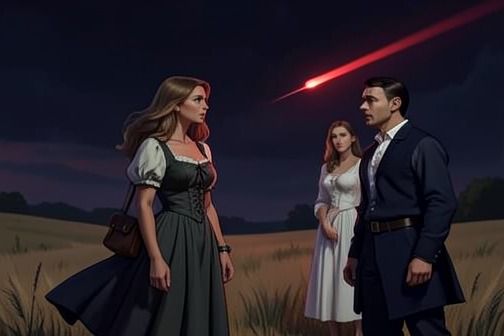
The [Meteor Shower and Eclipse Event](entity:event-recall-event-097e5064d028) is recalled as a day when extraordinary celestial phenomena coincided with [Saphira](entity:character-recall-character-saphira-ed60c2eb7974)’s father’s death. Though the book offers little direct description of the sky or the event itself, it gives that day lasting weight: two months later, the eclipse and meteor shower remain a measure of time, grief, and an unresolved prophecy that may involve Saphira and [Trevor](entity:character-recall-character-trevor-6629d67e0e5b).
## Timing and Immediate Aftermath
The event’s place in the story is established retrospectively. Saphira counts two months from the day of the meteor shower and eclipse, which was also the day her father died. By the time she marks that interval, the memorial service has passed and, as she describes it, nothing else has happened. The celestial event is thus paired not with an immediate spectacle of action but with bereavement and a stretch of anxious waiting.
That quiet is not entirely reassuring. [Amanda](entity:character-recall-character-amanda-f7c90eb37305) has seemed on edge and, over the preceding month, has tried to avoid Saphira. The account does not explain the cause of Amanda’s behavior at this point, but her unease places the event within an atmosphere of foreboding rather than treating it as an isolated astronomical occurrence.
## The Prophecy and the Choice to Fight
Later, Trevor voices the possibility that Amanda is right and that he and Saphira are the people named in the prophecy. The exchange connects the remembered celestial day to a future conflict in the characters’ minds, although the available account does not establish that the eclipse or meteor shower caused the prophecy or disclosed its meaning. What it does show is how the prophecy changes their sense of what may be coming: Trevor assumes they may have to fight, and Saphira intends to take part.
Trevor objects because Saphira is pregnant and, he argues, cannot lead an army. She answers that she is half faery and could cast a protective charm on herself; when he still rejects the risk, she insists that she will fight if they are the chosen ones. Her response makes the prophecy a point of disagreement as well as a source of fear: the prospect of danger does not persuade her to surrender her role in meeting it.
## [Pregnancy](entity:state-recall-state-pregnancy-cdafbf158725) and Protection
Saphira’s pregnancy had already changed how she spoke about danger to Trevor. She first tells him that neither of them can afford to be hurt, then confesses that she is pregnant and that a serious injury to him might affect the baby. Trevor’s widened eyes and immediate question confirm that this is news to him. The disclosure turns the expected risks of conflict into a family concern, but it does not settle who gets to decide whether Saphira may fight.
The later argument makes that tension explicit. Trevor frames pregnancy as a reason she cannot lead; Saphira invokes her faery heritage and a protective charm, then refuses to let his caution make the decision for her. The sequence places bodily risk, the child’s safety, and Saphira’s own agency in direct opposition without resolving them through a simple agreement.
## Long-Term Significance
The event remains a marker of uncertainty rather than a fully explained supernatural turning point. Two months after it, the characters are still waiting, while Amanda’s unease and the possibility of the prophecy give that waiting a threatening edge. The later dispute over whether Saphira can fight shows how the prophecy reaches into intimate life: it bears on her pregnancy, her partnership with Trevor, and her place in a possible conflict.
Years later, Saphira’s six-year-old daughter, [Crystal](entity:character-recall-character-crystal-bc6bb32b6e08), appears in the narrative. That later scene establishes a family future beyond the moment of danger, but it does not retrospectively explain the eclipse or the meteor shower. The event’s significance rests instead in the contrast between a day marked by death and strange celestial coincidence and the prolonged uncertainty that follows.
Event 18
Death of Saphira's Father
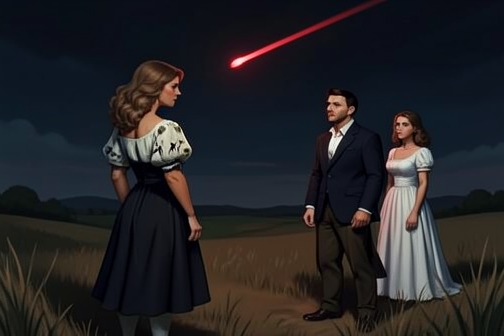
[Death of Saphira's Father](entity:event-recall-event-8bea22527727) is not presented as a detailed death scene but as a wound recognized through its aftermath. Two months after the memorial service, [Saphira](entity:character-recall-character-saphira-ed60c2eb7974) measures time from her father's death alongside the same-day meteor shower and eclipse, while the family waits for the prophecy crisis to reveal what those signs mean. The loss therefore becomes both private bereavement and part of a larger atmosphere of ominous uncertainty.
## Background and Delayed Recognition
The immediate circumstances of Saphira's father's death are withheld in the available narrative. What the reader receives is a retrospective marker: two months have passed since his death, and the memorial service has already taken place. This temporal distance gives the event a belated force. The death is not dramatized through a final conversation or physical scene; instead, it returns as a date against which Saphira's pregnancy, the eclipse, the meteor shower, and the family's unease are measured.
The coincidence of the death with the meteor shower and eclipse makes the loss inseparable from the story's supernatural and prophetic framework. Saphira notes that nothing has happened since the memorial service, a pause that contrasts the extraordinary celestial signs with the apparent stillness that follows. The silence does not resolve the danger. It suspends it, leaving [Amanda](entity:character-recall-character-amanda-f7c90eb37305) visibly on edge and making the father's death feel like part of a crisis whose meaning has not yet fully emerged.
## Protection, Poison, and the Value of Life
Elsewhere in the surrounding plot, the value of life is repeatedly placed under threat. A doctor reveals that the arrow that struck Saphira was coated in poison, causing [Ashton](entity:character-recall-character-ashton-b17e2cb78e23) to react with shock. [Trevor](entity:character-recall-character-trevor-6629d67e0e5b) later appears gravely incapacitated, with sweat-matted hair, pallid skin, and eyes twitching beneath his eyelids. Saphira must plead with [Carmen](entity:character-recall-character-carmen-20f84f7362f5) for more than five minutes before Carmen allows her one hour alone with him, while Carmen herself has not slept and is barely eating. These scenes do not establish how Saphira's father died, but they create the emotional and practical world in which his death is remembered: survival requires vigilance, and care is repeatedly entangled with fear of irreversible loss.
The same protective logic governs Saphira's pregnancy. She tells Trevor that neither of them can afford serious injury because harm to her might affect the baby. When Trevor insists that she must not fight because she is pregnant and cannot lead an army, Saphira rejects the restriction. She insists that, as half faery, she can cast a protective charm and declares that if she and the others are the chosen figures of the prophecy, she will fight. Her father's death thus forms part of a wider conflict over what protection means: whether love preserves life by limiting action, or whether agency itself is necessary when danger threatens the family and the wider community.
## Grief, Family, and the Prophecy
Saphira's father's death gains significance through its placement beside the prophecy rather than through explicit explanation. The meteor shower and eclipse occur on the same day as the death, and Amanda's unease persists in the following month. Trevor believes that, if Amanda is correct about the prophecy, they must fight; Saphira agrees with the underlying obligation even while refusing his attempt to exclude her from it. The event consequently operates as a threshold between ordinary family continuity and a future shaped by celestial signs, chosen identities, and possible war.
The death also intensifies the story's concern with family as something that must be actively maintained after catastrophe. Saphira eventually moves with Ashton from the pack house into a two-story house because her pregnancy leads them to establish a home of their own. Later, after Ashton finds her, she runs into his arms; he holds her carefully around her stomach and tells her that he missed her. This reunion does not erase the earlier loss, but it places mourning within an ongoing structure of attachment. The dead father remains part of the chronology, while the living family attempts to build a future under the pressure of what his death may signify.
## Aftermath and Return to Domestic Life
The strongest evidence of the aftermath is temporal and domestic. Two months after the death, Saphira is pregnant and experiencing the physical burdens of pregnancy, including the awkwardness she associates with walking like a penguin. Ashton has responded to the pregnancy by helping establish a separate household. The narrative therefore moves from memorialization and prophetic waiting toward the ordinary labor of preparing a home, a movement that does not cancel grief but shows life continuing around it.
Years later, Saphira is in the kitchen when her six-year-old daughter, [Crystal](entity:character-recall-character-crystal-bc6bb32b6e08), enters and calls her Mommy. Saphira is cooking chicken and has taken several cooking classes, though preparing the meal correctly still requires effort. The scene's modest domestic details provide the clearest counterpoint to the father's death. The celestial disturbance, the memorial service, the pregnancy, and the prophecy crisis recede behind a family whose future has become tangible in Crystal's voice and presence. The loss remains a fixed point in Saphira's history, but the ending emphasizes continuation: from a father remembered through death, the narrative arrives at a daughter who makes family life audible in the present.
## Narrative Significance
As an event, Death of Saphira's Father is defined by omission, recurrence, and consequence rather than spectacle. Its facts are sparse, but its placement is deliberate: the death is linked to the eclipse and meteor shower, recalled after the memorial service, and surrounded by scenes of poisoning, threatened injury, pregnancy, argument over military leadership, reunion, and parenthood. The event converts time itself into evidence of change. Saphira survives, chooses to retain authority over her own participation in the coming fight, reunites with Ashton, establishes a household, and later becomes the mother of Crystal.
The death's narrative function is therefore double. It is a personal bereavement that marks the disappearance of one generation, and it is a prophetic signal whose meaning remains unresolved during the period of waiting. By refusing to make the death a fully narrated scene, the story allows its consequences to carry the emotional burden. What is lost cannot be restored, but the living answer loss through care, resistance, remembrance, and the creation of a family future.
Event 19
Rogue Invasion and Saphira's Abduction
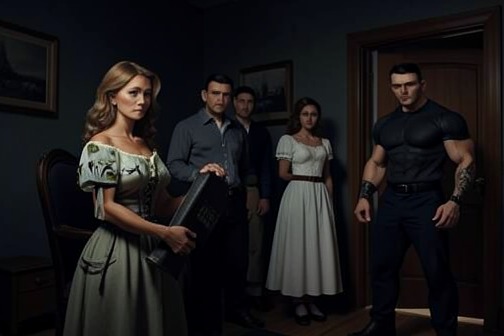
[Rogue Invasion and Saphira's Abduction](entity:event-recall-event-6411d61c30a9) is the decisive kidnapping that transforms a territorial incursion into a personal and political crisis. The [Rogues](entity:concept-recall-concept-rogues-f2a715641013) penetrate MoonRaiders Pack territory, reach [Saphira](entity:character-recall-character-saphira-ed60c2eb7974) inside her home, exploit her pregnancy as a visible vulnerability, and remove her by force. The abduction leaves [Ashton](entity:character-recall-character-ashton-b17e2cb78e23) facing an open door, an absent mate, and an enemy that has already demonstrated the ability to bypass the pack's defenses.
## Causes and Background
The invasion occurs within a world organized by species, bloodline, territory, and rank. [Ashton Smith](entity:character-recall-character-ashton-smith-566fce6d6c10) is the rebellious son of an alpha, known for partying, getting high, and moving from one girl to another, while [Saphira Richards](entity:character-recall-character-saphira-richards-d478b1b8aa33) is a werewolf whose shyness conceals both a witty personality and a darker past. Their relationship is already shaped by the unstable pressure of a mate bond: Saphira expects the bond to entail love, but Ashton has previously rejected her with disgust and declared that he will never love her. The later abduction therefore strikes a relationship that has moved from rejection toward attachment without erasing the earlier imbalance of power.
Saphira's identity is also more complicated than an ordinary werewolf's. She and [Trevor Richards](entity:character-recall-character-trevor-richards-0559ebda84e3) are half werewolf and half witch, and their mother had led the witches before her sister assumed that position. Their grandfather later summons both twins to perform the [Færy ritual](entity:concept-recall-concept-f-ry-ritual-b40016872b73), explaining that they were expected to lead their people after reaching eighteen but that their mother's departure changed the succession. The novel consequently places Saphira at the intersection of several communities and inherited obligations. The Rogue invasion threatens not only an individual mate and mother but also a figure whose body and lineage carry political significance.
The wider supernatural order is already marked by species conflict. [Banshees](entity:character-recall-character-banshees-fb983a4bf84e) and the faeries are natural foes, and a Banshee's scream can reach a pitch capable of killing a member of Saphira's kind if exposure lasts long enough. Another prophecy foresees a war between vampires and werewolves on the night when the sun is black and stars cross the sky; two hybrids of the same origin are destined to lead the winning side. The abduction is not presented as an isolated household crime. It enters a narrative where species boundaries, rival territories, and hybrid identities make individual bodies targets in a looming struggle for dominance.
## The Invasion and the Abduction
The immediate attack begins when Saphira is at home. She starts to speak casually about an adorable incident involving [Crystal](entity:character-recall-character-crystal-bc6bb32b6e08), then stops when she sees a stranger in the doorway. His presence is identified first through smell: Saphira detects that he is Rogue. He has pitch-black eyes and matching hair, and she steps back, growling as she tries to shield her enlarged stomach. The defensive gesture establishes the central stakes of the scene before the Rogue openly states them: Saphira is not merely a pack member but a pregnant Luna carrying a child.
The Rogue advances while insisting that he has not come to hurt Saphira or her baby. His reassurance does not reduce the danger because his actions contradict the apparent promise. Saphira orders him to stay back, asks what he wants, and tries to increase the distance between them, but the room leaves her cornered. The scene turns language into a failed form of protection: the intruder's words offer safety while his movement removes it, and Saphira's questions cannot recover control of the encounter.
The Rogue then tells Saphira that she will be fine and roughly presses a cloth over her nose and mouth. Her senses blur, panic rises, and she reaches for Ashton through the mind link before falling into the Rogue's arms. The attack thus defeats both ordinary physical resistance and the relational system that should connect her to the pack. Saphira manages to send a warning, but the message arrives too late to prevent her removal.
## Territorial Breach and Island [Captivity](entity:state-recall-state-captivity-0bc31185b3d3)
The kidnapping is enabled by a broader Rogue invasion. The Rogues cross MoonRaiders Pack boundaries while the pack is caught off guard, successfully getting through the main guards. Their ability to pass the perimeter exposes a failure in the territorial order on which pack security depends. A boundary that should distinguish protected members from hostile outsiders becomes permeable, allowing the threat to travel from the edge of the territory into Saphira's private space.
Ashton reacts from the pack's crisis meeting with immediate anger and urgency. He declares that he does not care about the Rogues and must find Saphira, but the account also records the strategic warning that a war was what the group had initially tried to avoid. His impulse is personal and violent, while the surrounding problem is collective and political: a rescue may answer the kidnapping, yet an uncontrolled response could widen the conflict the pack is attempting to contain.
When Ashton reaches the house after hearing Saphira's frightened yell, the front door is wide open. Inside, Saphira is already gone. The empty entrance and absent body become the material evidence of the invasion; no confrontation with the kidnapper remains, only the aftermath of his passage. Ashton does not know which Rogues took her, but he resolves to find them and kill them. His search begins in uncertainty, with determination substituting for information.
Saphira eventually discovers that she has been taken to an island. She walks to the water's edge and realizes that she is trapped, because the only apparent route home would require shifting and swimming. [Pregnancy](entity:state-recall-state-pregnancy-cdafbf158725) makes shifting too risky, so the island's surrounding water functions as both a physical boundary and a bodily constraint. The abduction therefore does not end with the removal from her house. It becomes captivity designed around the limits of her condition, isolating her from MoonRaiders Pack and making escape potentially dangerous even without a visible guard.
## Stakes, Care, and Consequences
Saphira's pregnancy changes the meaning of every decision after the kidnapping. Before the invasion, Trevor Richards warns her that she cannot lead an army because she is pregnant. Saphira answers that she is half faery and can cast a protective charm on herself, preserving her intention to act rather than accept protection as a reason for political withdrawal. The Rogue's attention to her enlarged stomach makes the pregnancy equally central to the enemy's calculations, whether or not his stated purpose is truthful.
The book repeatedly frames protection as both care and control. When [Trevor](entity:character-recall-character-trevor-6629d67e0e5b) is later found limp, pale, and visibly ill, Saphira begs [Carmen](entity:character-recall-character-carmen-20f84f7362f5) for more than five minutes to be allowed an hour alone with him; Carmen has not slept and is barely eating, suggesting how crisis reorganizes the emotional and physical labor of those who remain. In the abduction, by contrast, Saphira's own protective action is reduced to shielding her stomach and sending a mind-linked warning. Her agency persists, but the attack forces it into compressed forms: warning, resistance, and the attempt to preserve the unborn child.
The invasion also links private attachment to pack-level identity. Saphira is a pregnant Luna, a hybrid of werewolf and witch, a twin, and a mate whose bond with Ashton has been repeatedly tested. The Rogues cross the boundary protecting the pack, then target the person through whom family, succession, and future continuity converge. Their attack challenges the belief that territory, rank, and kinship can guarantee safety. It demonstrates that the most guarded identity may also be the most valuable hostage.
## Significance and Immediate Aftermath
Rogue Invasion and Saphira's Abduction is a threshold event in which the novel's boundaries collapse in sequence: the Rogues cross the pack's perimeter, an unknown wolf crosses the household threshold, Saphira is separated from her mate and community, and the pregnant body becomes confined by the sea. Each crossing produces a new form of vulnerability. The territory is breached, the home is emptied, and the island converts distance into imprisonment.
The event also intensifies the contrast between Saphira's status and her actual security. She possesses hybrid heritage, a leadership claim, a mate bond, and the protective instincts of a future mother, yet none of these prevents a single Rogue from reaching her. Ashton’s later reunion with Saphira is marked by her throwing herself into his arms while he holds her carefully around her stomach and tells her that he missed her. That embrace restores immediate intimacy after the separation, but it cannot undo what the invasion revealed: in a world approaching war, love and rank may motivate rescue, while only vigilance can prevent the next breach.
Event 20
Saphira's Island Rescue

[Saphira's Island Rescue](entity:event-recall-event-1d9368faf08f) is the turning point that converts [Saphira Richards](entity:character-recall-character-saphira-richards-d478b1b8aa33)'s island captivity from an apparently sealed crisis into a hard-won return. A rogue has taken her and threatens her while she is pregnant, but [Trevor Richards](entity:character-recall-character-trevor-richards-0559ebda84e3) reaches her through the extraordinary connection between the twins and uses a perilous faery ritual to find her. The rescue does not erase the costs of the ordeal: [Trevor](entity:character-recall-character-trevor-6629d67e0e5b) is exhausted, [Ashton Smith](entity:character-recall-character-ashton-smith-566fce6d6c10) is injured and anxiously waiting at the shoreline, and the reunion occurs against a background of poison, violence, and uncertain survival.
## Causes and Stakes
The rescue becomes possible because Trevor understands that his relationship with [Saphira](entity:character-recall-character-saphira-ed60c2eb7974) is more than ordinary family affection. He explains that she is his twin and that they share a connection “beyond just blood.” That bond gives the search its emotional force and its practical basis. Trevor therefore proposes a ritual faeries can perform when searching for one of their own, treating Saphira's disappearance not as an ordinary kidnapping but as a crisis that requires inherited supernatural knowledge.
The ritual carries a severe price. Trevor states that only full faeries have ever performed it, that it drains their energy and power, and that allowing it to continue too long could cause death. The danger is intensified by the twins' life-and-death connection: if one dies, the other dies as well. Trevor's attempt to locate Saphira is consequently both a rescue operation and a form of self-endangerment. His route toward her places his own life at risk because Saphira's survival and his survival are inseparable.
Saphira's condition raises a second stake. When Trevor reaches her, she shields her stomach because she is pregnant. Earlier, Trevor had warned her that she could not lead an army while carrying a child, while Saphira insisted that her half-faery abilities would allow her to cast a protective charm. The island rescue therefore protects not only Saphira but also the pregnancy, while exposing the conflict between protective care and Saphira's determination to retain agency in a violent struggle.
## The Rescue on the Island
The immediate scene begins with Saphira trapped in a room as several footsteps approach. The door flies open, and she comes face to face with the rogue who took her. His eyes are dark black because his Wolf has taken over. Saphira backs into the wall and shields her stomach, unable to understand what is happening and unable to meet the threat by herself.
At the moment the rogue is about to close the distance, Trevor intervenes. He throws the rogue halfway across the room, where the attacker lands against the wall in a heap. Trevor is smiling and breathing heavily, a physical sign that the rescue has demanded strenuous effort even though the scene presents his arrival as sudden and effective. He does not pause for a sentimental exchange. Instead, he grabs Saphira's hand and tells her to come before [Ashton](entity:character-recall-character-ashton-b17e2cb78e23) has a heart attack, pulling her out of the room while the danger remains close behind.
The escape is completed through a mixture of speed and faery power. As they near the main entrance, Saphira hears a menacing growl from the room she has just left. Trevor calls that their cue, throws open the door, slams it shut, and casts a charm on it. The action creates a temporary barrier rather than a claim that the danger has vanished. The rescue is thus structured as an urgent extraction: confrontation, physical removal, magical containment, and flight.
## Reunion at the Shoreline
Outside, Saphira scans the area for Ashton and sees him pacing nervously along the shoreline. He has a limp, which makes her wonder why he did not come inside to get her. His injury and his distance reveal that he has not been passive, but that he has been unable to enter the rescue room himself. His waiting gives the shoreline the quality of a threshold between captivity and safety, with Ashton positioned at the edge of the island crisis.
Trevor reaches Saphira first and pulls her into a hug. She returns the embrace, smiling against his shoulder. The physical reunion confirms that the twin bond has brought them back together, but it also gives the dangerous ritual a human consequence: Trevor has not merely identified her location; he has restored contact with the sister whose death would mean his own death.
Ashton then walks toward Saphira, and she finds herself moving toward him. When they are only a foot apart, she throws herself into his arms. He wraps his arms around her carefully around her stomach, making the pregnancy part of the gesture rather than an incidental detail. He tells her that he missed her, and when she replies that she was gone only a day, he answers that he misses her whenever they are apart. Their reunion ends in a kiss, and Saphira concludes that Ashton has found her and that perhaps everything will be all right this time.
## Immediate Consequences and Aftermath
The rescue changes the central value of the scene from captivity to reunion. Saphira begins isolated, cornered, and physically threatened; she leaves the room holding Trevor's hand, passes through a magically sealed entrance, and reaches the shoreline where both her twin and her mate are waiting. Freedom is therefore represented not as solitary escape but as restored connection—with Trevor through the twin bond and with Ashton through physical intimacy and renewed hope.
The relief remains qualified. Trevor is breathing heavily after forcing the rogue across the room and sealing the door. Ashton has a limp and has been pacing nervously rather than approaching without restraint. Saphira is pregnant and has just protected her stomach from an attacker. The rescue offers safety in the immediate sense, but the bodies of the rescuers and the rescued retain evidence of the danger that produced the reunion.
The island sequence also gains significance from the wider pattern of injury and care surrounding the characters. Saphira had previously been struck by an arrow coated in poison, and Trevor is later seen in a limp, pale, feverish condition so severe that [Carmen](entity:character-recall-character-carmen-20f84f7362f5) has not slept and has barely eaten while caring for him. Against that background, Trevor's appearance at the island door is not a cost-free heroic entrance. It is another instance of rescue being purchased through bodily depletion, with care repeatedly moving between Saphira, Trevor, Ashton, and those who remain awake to watch over the injured.
## Narrative Significance
Saphira's Island Rescue brings together the story's recurring systems of kinship, supernatural inheritance, and romantic restoration. The faery search ritual makes blood connection operational: Trevor's twinhood is not merely a family fact but the means by which Saphira can be found. The ritual's danger also prevents the supernatural solution from becoming effortless. It works because Trevor accepts a cost that could kill him, and because the twins' shared fate makes inaction impossible.
The event further complicates the language of protection. Trevor protects Saphira by acting decisively and moving her away from the rogue, while Ashton receives her with care around her stomach. Yet Saphira has already asserted that her half-faery status gives her a way to protect herself, and she refuses to be reduced to a passive figure in the larger conflict. The rescue preserves her life without resolving the tension between others' desire to shield her and her own wish to participate in events that threaten her family.
Its final image is deliberately hopeful but not conclusive. Saphira kisses Ashton and thinks that everything may turn out well, while the limping Ashton, exhausted Trevor, the sealed room, and the continuing danger all resist complete closure. The island rescue is therefore a genuine return from captivity, but not a declaration that violence has ended. It restores the characters to one another and gives Saphira a future to defend, while leaving the larger war and the costs of survival still present.